Are steel houses environmentally friendly in 2026? The answer depends on their full life cycle, not simply on the material’s strength. Steel can contain recycled content, withstand moisture, and remain useful for decades. It can also be recovered and recycled when a building is carefully dismantled. These advantages matter in a world facing rising material demand and construction waste.
However, steel production still requires substantial energy. Its embodied carbon may be higher than some timber or masonry options, depending on manufacturing methods and transportation distances. A steel frame shipped across continents tells a different environmental story from locally produced steel with verified recycled content. Insulation, windows, airtightness, and heating systems also shape the house’s long-term impact. The frame is only one part.
Real projects reveal the complications. A well-insulated steel home can use less energy during cold winters, especially when its thermal bridges are professionally controlled. Poor detailing can create condensation, heat loss, and uncomfortable rooms. That weakens the environmental case. Life-cycle assessments, environmental product declarations, and regional building standards offer stronger evidence than marketing claims. Yet these tools are not perfect; assumptions can change the result. Some data remain incomplete.
This article examines steel houses through material sourcing, construction, energy performance, durability, maintenance, and end-of-life recovery. It considers practical details, such as factory waste, delivery distances, protective coatings, and the difficulty of separating mixed materials. The goal is not to praise or dismiss steel. It is to ask a more useful question: when, where, and how can a steel house reduce environmental harm?
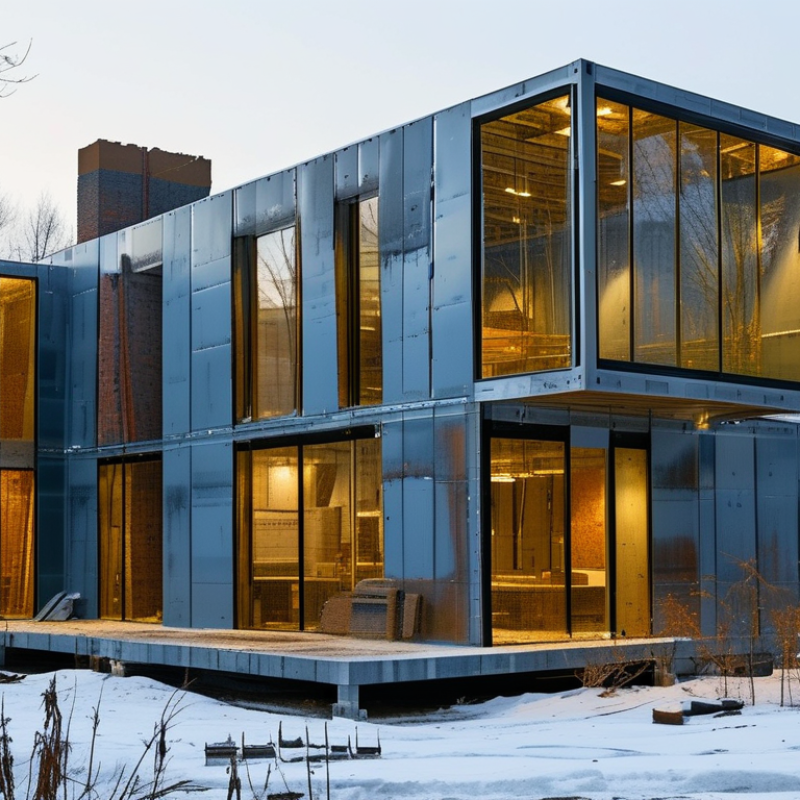
In 2026, a steel house is not simply a home with silver walls. It usually has a load-bearing steel frame, often made from cold-formed or welded sections. Exterior cladding, insulation, windows, and interior finishes complete the building envelope. Some designs use steel only for the frame. Others combine it with timber, concrete, or engineered panels. A steel house is defined by its structural role, not its appearance. That distinction matters when environmental claims are measured.
A credible 2026 definition also includes performance data. Designers should examine recycled steel content, fabrication waste, transport distance, and the frame’s expected service life. Thermal bridges around studs can create cold stripes indoors and increase heating demand. Continuous insulation, careful air sealing, and correctly detailed window junctions reduce that risk. Details decide. Factory cutting can improve accuracy, although it does not automatically make construction low-carbon. The electricity source and delivery miles still matter.
Steel can be recovered at the end of a building’s life, but recyclability is not the same as low impact. Producing new steel remains energy intensive, even when scrap enters the furnace. I once treated a durable frame as an environmental answer; that was too simple. A smaller, well-insulated house may outperform a larger steel house with poor detailing. Assessment should include whole-life carbon, operating energy, moisture control, repair access, and local climate. Real projects are messier.
Steel house construction affects the environment through both material production and long-term building performance. The World Steel Association reports that steelmaking creates about 7–9% of global carbon dioxide emissions. A steel frame may arrive precise and lightweight, but its production carries substantial embodied carbon. Mining, coking, transport, and high-temperature furnaces all contribute. The footprint changes with recycled content, electricity sources, and manufacturing efficiency.
The building envelope matters greatly. Poorly insulated steel walls can form thermal bridges, like cold lines around studs on a winter morning. Heating systems then work harder. The International Energy Agency identifies building energy use as a major global emissions source, so airtight construction and continuous insulation are essential. Careful detailing can reduce heat loss, moisture problems, and future repairs. Steel itself does not guarantee efficiency.
Steel has a strong circular advantage. World Steel Association data shows that more than 650 million tonnes of steel are recycled globally each year. However, recycling is not automatic. A demolition crew must separate framing, coatings, fasteners, and other materials. That takes planning. The U.S. Environmental Protection Agency’s life-cycle guidance also warns that material impacts depend on transport, service life, and replacement frequency. This is the uncomfortable part. A durable steel frame may last for decades, yet an oversized design or poorly insulated shell can erase much of that benefit. Environmental claims should therefore rely on project-specific life-cycle assessments, environmental product declarations, and measured energy performance.
Are Steel Houses Environmentally Friendly in 2026?
Energy Efficiency and Resource Use in Steel Homes
Steel homes can use less operational energy when their envelopes are designed carefully. Steel framing does not provide meaningful insulation by itself. Its conductivity can create thermal bridges through walls and roofs. Continuous insulation, airtight membranes, and properly sealed joints reduce these losses. In a well-built home, indoor temperatures remain steadier during cold nights and hot afternoons. Heat pumps can then operate with less effort. Small details matter.
Resource use is more complicated. Steel contains significant embodied energy, especially when produced from virgin materials. Recycled steel can reduce this burden, although recycling still requires collection, processing, and transport. Factory-cut components may also reduce construction waste. However, shipping heavy panels over long distances can weaken that advantage. A local life-cycle assessment offers better evidence than a general environmental claim.
From practical site observations, steel structures often resist insects, moisture damage, and fire better than some conventional materials. That durability can extend a building’s useful life. Yet poor ventilation may create condensation around cold steel members. Repairs can become expensive when hidden moisture remains unnoticed. I would also question oversized steel sections, because strength can become unnecessary material consumption. The most responsible design balances structural safety, insulation thickness, maintenance access, and future disassembly. A house that lasts longer still needs efficient windows, careful shading, and modest energy demands.
Energy efficiency in a steel home depends heavily on insulation, airtightness, windows, and heating and cooling systems. The chart shows the average share of U.S. household energy use by end use, highlighting the areas where an efficient steel-home design can reduce operational energy demand.
Data source: U.S. Energy Information Administration, Residential Energy Consumption Survey, 2015. Steel framing can support durable and recyclable construction, but thermal bridging must be addressed with continuous insulation and careful envelope design.
Steel houses offer a strong recycling advantage. World Steel Association data reports roughly 680 million tonnes of steel scrap recycled globally each year. Steel can return to production repeatedly without losing its basic properties. That matters when a house reaches demolition. Bolted connections also make careful disassembly easier than breaking concrete apart. Still, recycling is not automatic. Mixed materials, insulation, coatings, and contaminated joints can reduce recovery.
Durability changes the lifecycle calculation. A protected steel frame can resist termites, moisture, and structural movement for decades. However, poor detailing may create corrosion around fasteners or openings. Repairs then consume new materials and energy. The International Energy Agency estimates iron and steel production creates about 7% of global energy-related emissions. Therefore, a long-lasting frame does not erase its manufacturing burden. It only spreads that burden across more years.
The hidden issue is electricity. Steel made with lower-carbon power usually has a smaller lifecycle footprint than conventional production. The result also depends on transport, recycled content, insulation, heating systems, and future reuse. Environmental product declarations can compare these factors, but their assumptions deserve close inspection. A steel house may be recyclable, durable, and still environmentally weak. I would not label every steel home green. The honest answer remains conditional.
Steel houses can reduce environmental pressure, but their performance depends on design, sourcing, and construction quality.
A steel frame arrives straight, dimensionally stable, and resistant to termites and rot. That can reduce material waste during installation. The World Steel Association reports that steel can be recycled repeatedly without losing its essential properties. Reusing structural members also lowers demand for newly produced material.
The limitation is embodied carbon. The International Energy Agency estimates that iron and steel production creates about 2.6 gigatonnes of direct carbon dioxide emissions annually. A lightweight steel frame may use less material than some alternatives, yet producing that steel remains energy intensive. Transport adds another burden when components travel long distances. The U.S. Environmental Protection Agency also notes that recycling steel saves substantial energy compared with producing primary steel, but recycling does not erase the original emissions.
Operational performance matters too. A steel wall with continuous insulation can reduce cold bridges around studs and lower heating demand.
Poor detailing can reverse that benefit. Metal also conducts heat quickly, so gaps around windows or fasteners may create cold interior surfaces. The House Energy Rating procedure and whole-life carbon assessments should examine insulation, maintenance, replacement cycles, and end-of-life recovery.
Steel houses are not automatically green. Their advantage is conditional, and that condition is often overlooked.
: It usually has a load-bearing steel frame. Its appearance does not define it. Cladding, insulation, windows, and interior finishes complete the home.
No. Their impact depends on steel production, insulation, transport, energy use, and future repairs. The answer is conditional.
Continuous insulation limits heat loss through steel studs. Airtight membranes also reduce drafts. Sealed window joints matter greatly. Exterior shading can protect rooms during hot afternoons.
No. Steel conducts heat easily and can create cold stripes indoors. Thermal breaks and continuous insulation reduce these bridges.
Recycled steel usually reduces raw material demand. However, collection, processing, and transport still consume energy. Recycling is helpful, not magical.
They can resist insects, fire, and certain moisture damage. Poor detailing may still cause corrosion around openings and fasteners. Durability depends on maintenance.
Compare recycled content, fabrication waste, transport distance, insulation, heating systems, and expected service life. Whole-life carbon gives a clearer picture than one material claim.
Factory cutting can improve accuracy and reduce site waste. Long-distance shipping may weaken that benefit. Local evidence matters.
Cold steel members may collect condensation when ventilation is poor. Hidden moisture can damage finishes and increase repair costs. Small leaks become expensive.
Yes. A compact, well-insulated home may use fewer resources than a larger, poorly detailed one. I once assumed durability solved everything. That was too simple.
In 2026, a steel house is defined by its use of structural steel framing, often combined with insulated panels, recycled materials, efficient windows, and smart energy systems. To understand whether are steel houses environmentally friendly, it is important to consider their entire lifecycle rather than focusing only on construction. Steel production can require significant energy and create emissions, while transporting heavy components may also increase environmental costs. However, precise manufacturing can reduce construction waste, and steel structures are often durable, adaptable, and resistant to pests, fire, and weather-related damage.
During operation, well-insulated steel homes can use less energy for heating and cooling, especially when their design includes renewable energy and efficient ventilation. Steel is also highly recyclable, which can reduce demand for new raw materials when buildings are renovated or dismantled. Nevertheless, corrosion protection, insulation choices, and the carbon intensity of steel production affect the final impact. Overall, steel houses can offer meaningful environmental advantages, but their sustainability depends on responsible sourcing, energy-efficient design, long service life, and effective recycling.

Umo House