How to Import Steel Structure Houses from China?

Time:2026-10-11 Author:Liam
0%

Learning how to import steel structure houses from China requires more than finding a low factory quotation. It involves engineering review, supplier verification, shipping coordination, customs compliance, and local building approval. China produced approximately 1.005 billion tonnes of crude steel in 2024, according to the World Steel Association. Its manufacturing scale is impressive. However, scale does not guarantee suitable quality.

McKinsey’s Reinventing Construction report indicates that modular methods can reduce project schedules by 20–50% and construction costs by roughly 20%. These figures are potential outcomes, not promises. A house may leave a Chinese factory with certified welds, yet fail local requirements for wind loads, insulation, fire resistance, or seismic performance. Ryan E. Smith, an offsite-construction researcher and author of Offsite Architecture, has cautioned, “Offsite construction is not a panacea.” That warning matters.

A reliable importing plan begins with approved drawings, a detailed bill of materials, and a written specification for steel grades, coatings, fasteners, panels, windows, and electrical systems. Request factory records, ISO 9001 evidence, welding qualifications, and independent pre-shipment inspections. Confirm the correct HS codes and Incoterms before payment. Calculate the landed cost, including ocean freight, insurance, duties, port handling, inland transport, and possible anti-dumping measures.

Small details become expensive. A missing drainage channel can delay installation. An unclear foundation interface can stop the project entirely. The process is not perfectly predictable, and early assumptions deserve review. The safest approach combines Chinese production efficiency with independent engineering and local regulatory expertise.
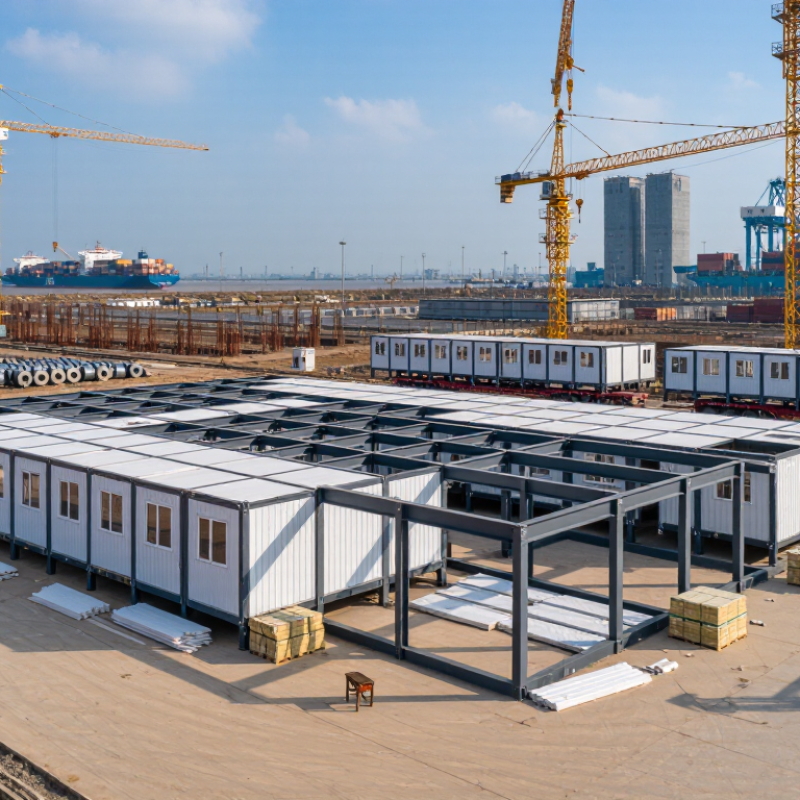
How to Import Steel Structure Houses from China?

What Are Steel Structure Houses and Why Import Them from China?

Steel structure houses use load-bearing steel frames instead of conventional masonry walls. Columns, beams, roof trusses, insulated panels, windows, and services are manufactured or prepared before delivery. The system can create a compact two-storey home, a workshop, or a larger modular residence.

China is a major sourcing base because its steel supply chain is extensive. The World Steel Association reported approximately 1.019 billion tonnes of crude steel production in China in 2023. This scale supports competitive material pricing, broad fabrication capacity, and access to automated cutting and welding equipment. In procurement practice, buyers can also request shop drawings, weld inspection records, coating specifications, and factory photographs before shipment. Small details matter.

Cost is not the only reason to import. UNEP’s 2024 Global Status Report states that buildings and construction consumed about 32% of global energy and generated 34% of global carbon emissions in 2023. Efficient insulation, reduced site waste, and accurate prefabrication can improve a project’s environmental performance.

However, a low factory quotation may hide expensive freight, customs duties, foundation changes, or local code adjustments. That assumption needs testing. Buyers should verify snow, wind, seismic, fire, thermal, and electrical requirements with qualified local professionals. Steel quality is important, but design compatibility is equally important. Mistakes often begin before production.

How to Define Your Project Requirements and Choose a House Type

How to Import Steel Structure Houses from China?

How to Define Your Project Requirements and Choose a House Type

Before requesting quotations, define the site, purpose, and daily occupants. Measure the available land and record access limits for delivery vehicles. Confirm local wind, snow, seismic, fire, insulation, and energy requirements. A coastal plot may need stronger corrosion protection than an inland site. Decide whether the house is permanent, seasonal, single-story, or multi-story. I once underestimated storage space and had to revise the floor plan. Small omissions can create expensive changes later.

Tips: Prepare a one-page project brief with dimensions, room functions, target budget, foundation expectations, and delivery location. Add photographs, soil information, and a simple site sketch. Ask suppliers for structural drawings, material specifications, connection details, test documents, and installation instructions. Keep every revision dated. This makes comparisons more reliable.

Choose the house type after understanding the site, not before. Light-gauge steel suits efficient layouts and faster assembly, while heavier steel systems may support larger spans. Panelized designs can simplify transport and installation. Modular units may reduce site work, but road width and lifting equipment become critical. Check ceiling heights, window positions, plumbing routes, and maintenance access. Do not judge a proposal by appearance alone. Compare thermal performance, coating quality, fire resistance, service life, and replacement procedures. A perfect plan rarely survives the first site inspection. Leave practical adjustment space.

How to Find and Evaluate Reliable Chinese Manufacturers

How to Import Steel Structure Houses from China?

How to Find and Evaluate Reliable Chinese Manufacturers

A reliable manufacturer should provide more than attractive drawings and a low quotation. Ask for factory registration, production photos, material specifications, and recent export references. Ask for evidence.

Check whether the factory controls cutting, welding, surface treatment, and packing. During a video inspection, request a close view of steel plates, welding seams, storage areas, and moisture protection. Details matter. A clean workshop does not automatically prove quality, but poor material storage should raise concerns. Confirm the steel grade, coating thickness, design loads, connection method, and insulation performance. These details affect safety, transport, and long-term maintenance.

Request a complete sample package before signing. It should include structural calculations, shop drawings, test reports, installation instructions, and a clear list of included materials. Independent inspection can verify dimensions, weld quality, coating thickness, and container loading. Compare at least three suppliers, but do not choose by price alone. A cheap offer may exclude windows, fasteners, drainage parts, or technical support. I have seen buyers focus on the house shell and overlook foundation requirements. That mistake can create delays and unexpected costs. Confirm production timelines, payment stages, warranty terms, replacement procedures, and communication responsibilities in writing. A manufacturer that answers difficult questions clearly is usually easier to manage when problems appear.

How to Manage Design, Contracts, Quality Checks, and Production

Importing Steel Structure Houses from China

A reliable project starts with a complete design brief, not a attractive brochure. Share site measurements, soil information, wind loads, and local building requirements with the engineering team. Ask for structural drawings, connection details, insulation specifications, and a clear material schedule. A qualified local engineer should review the design before production. Small omissions can become expensive changes later.

The contract must describe steel grades, coating thickness, dimensions, packaging, delivery terms, inspection rights, and correction procedures. Include approved drawings as contract attachments. Define payment milestones around design approval, material preparation, factory completion, and final inspection. Avoid vague phrases such as “high quality.” Use measurable requirements instead. I have found that unclear responsibilities cause more delays than factory capacity.

Quality control needs evidence. Request mill certificates, welding procedures, welder qualifications, bolt records, and coating reports. During production, check cutting accuracy, weld appearance, hole alignment, and corrosion protection. Photos help, but an independent inspection gives stronger confidence.

Production should follow an agreed schedule with hold points before welding, painting, and loading. Count every frame, panel, bolt box, and accessory before shipment. Something is often missed. Keep a packing list with labels matching the installation drawings. My own planning has sometimes focused too heavily on production and not enough on unloading space, local equipment, and assembly skills. That mistake is preventable.

How to Arrange Shipping, Customs Clearance, and Local Assembly

How to Import Steel Structure Houses from China?

Shipping begins with accurate cargo planning, not a booking request. Steel frames may ship as flat-packed bundles, while panels, windows, and fittings need separate protection. UNCTAD’s Review of Maritime Transport 2023 reports that over 80% of global trade by volume moves by sea. Choose container loading based on dimensions, weight, and unloading equipment. A packing list should show every bundle, part number, gross weight, and lifting point. Small mistakes matter.

Customs clearance requires more than a commercial invoice. Confirm the correct HS classification with a licensed customs broker before production. Steel frames, complete prefabricated buildings, insulation, and electrical items may receive different classifications. Prepare the invoice, packing list, bill of lading, origin documents, structural drawings, and applicable conformity records. The World Bank’s Logistics Performance Index 2023 used feedback from 4,090 logistics professionals across 139 countries. Its findings underline the importance of predictable customs and reliable logistics services. Do not rely on a supplier’s classification alone.

Local assembly should be planned before the vessel leaves China. Check foundation dimensions, anchor-bolt positions, crane access, road restrictions, and weather protection. Provide numbered drawings and a bolt schedule to the local crew. A site supervisor should inspect frame alignment before tightening connections. Insurance should cover loading, sea transport, unloading, and storage. In practice, the schedule may still fail because one permit or missing drawing was overlooked. That weakness deserves honest review. A cheaper shipment can become expensive after demurrage, rework, or local storage.

How to Import Steel Structure Houses from China? — Shipping, Customs Clearance, and Local Assembly
Stage Data Dimension Typical Requirement or Value Practical Planning Guidance
1. Project Definition Building classification Prefabricated steel-frame house, modular building, panelized kit, or a combination of these systems Confirm whether the shipment includes only the structural frame or also wall panels, roofing, windows, doors, insulation, plumbing, and electrical components.
1. Project Definition Applicable building regulations Local structural, fire, energy, electrical, plumbing, wind, snow, seismic, and thermal-performance requirements Local regulations take priority over factory drawings. A licensed professional in the destination country may need to review or approve the design.
1. Project Definition Steel design information Steel grade, member sizes, connection details, corrosion protection, welding standard, and design loads Request signed structural calculations, material certificates, coating specifications, and connection drawings before production.
2. Commercial Terms Recommended contract information Product scope, technical specifications, packing list, delivery schedule, inspection procedure, warranty, spare parts, and documentation Specify the exact quantities and dimensions of every component. Separate the price of goods, inland transport, export handling, ocean freight, insurance, and destination charges.
2. Commercial Terms International trade term Use a clearly defined Incoterms® 2020 rule, such as FOB, CFR, CIF, FCA, or DAP Confirm which party is responsible for export clearance, freight, insurance, destination handling, import duties, taxes, and final delivery.
3. Cargo Planning Typical cargo form Disassembled and packed steel members, panels, fasteners, fixtures, doors, windows, and installation accessories Flat-packing and component bundling can reduce volume, but the packing plan must protect coated steel, panels, glass, and finished surfaces from moisture and impact.
3. Cargo Planning Standard 20-foot dry container interior Approximately 5.90 m long × 2.35 m wide × 2.39 m high; typical maximum payload is about 28 metric tonnes, subject to container and route limits Use the shipping line’s confirmed container specifications. Actual usable space is lower because of packaging, lashing, and clearance requirements.
3. Cargo Planning Standard 40-foot dry container interior Approximately 12.03 m long × 2.35 m wide × 2.39 m high; typical maximum payload is about 26–28 metric tonnes, subject to route limits Choose the container size according to both volume and weight. Heavy steel bundles may reach the weight limit before the container is full.
3. Cargo Planning Special or oversized cargo Open-top, flat-rack, or breakbulk transport may be required when components exceed standard container dimensions or cannot be safely loaded Obtain a dimensioned packing list and gross weight before booking. Oversized cargo may require special permits, lifting plans, and additional port charges.
4. Export Documentation Core shipping documents Commercial invoice, packing list, sales contract, bill of lading or sea waybill, export declaration, and insurance certificate when applicable Descriptions, quantities, weights, package marks, consignee details, and values should match across all documents.
4. Export Documentation Technical document package Assembly drawings, installation manual, component schedule, material certificates, coating records, inspection records, and maintenance instructions Provide documents in the language required by the destination authority. Keep one digital set and one weather-protected printed set with the shipment.
5. Customs Classification HS classification Steel structures, parts of structures, panels, doors, windows, hardware, electrical products, and sanitary items may fall under different HS headings Do not classify the entire project under one code without verification. The final code depends on the product form, material, function, and destination-country tariff rules.
5. Customs Clearance Import declaration data Importer of record, tariff code, customs value, country of origin, gross and net weight, package count, transport details, and permits if required Use a licensed customs broker where appropriate. Confirm duty, import VAT or sales tax, inspection fees, port storage, and examination charges before shipment.
5. Customs Clearance Wood packaging compliance Wood pallets, crates, and dunnage may need treatment and an internationally recognized compliance mark under destination-country rules Ask for heat-treated or compliant packaging when wood is used. Non-compliant wood packaging can cause inspection, re-export, treatment, or disposal costs.
6. Pre-Shipment Control Inspection checkpoints Dimensions, steel grade, weld quality, coating condition, hole locations, component quantities, labeling, and packing condition Complete a factory inspection before loading. Photograph bundles, labels, container condition, moisture protection, and the final seal number.
6. Pre-Shipment Control Container loading record Container number, seal number, package numbers, gross weight, loading sequence, securing method, and loading photographs Place a waterproof packing list inside the container and attach a duplicate document pouch outside where permitted.
7. Ocean Shipping Transit-time planning Port-to-port ocean transit commonly ranges from about 15 to 45 days, excluding production, transshipment, customs, and inland delivery Actual time depends on the origin port, destination port, route, sailing frequency, transshipment, weather, congestion, and inspection requirements.
7. Ocean Shipping Recommended shipping insurance Marine cargo insurance covering loss, damage, water exposure, handling incidents, and other agreed risks Check exclusions carefully. Confirm whether the policy covers the invoice value, freight, duties, installation materials, and general average exposure.
8. Destination Handling Port and inland delivery requirements Customs release, terminal handling, container pickup, chassis or trailer, delivery appointment, unloading area, and empty-container return Verify that the delivery site has suitable road access, turning space, unloading space, and a firm surface for cranes or forklifts.
8. Destination Handling Demurrage and detention risk Charges may apply when containers remain at the terminal too long or are not returned within the carrier’s free-time period Prepare customs documents before arrival and confirm free time, terminal procedures, appointment rules, and empty-return location in advance.
9. Local Site Preparation Foundation readiness Completed and inspected foundation, anchor bolts, datum lines, drainage, utility routes, and surveyed setting-out points Do not begin steel erection until foundation dimensions and anchor-bolt positions have been checked against the approved structural drawings.
9. Local Site Preparation Site equipment Crane or telehandler, lifting accessories, temporary bracing, scaffolding, power tools, torque tools, personal protective equipment, and weather protection Equipment capacity must match the heaviest component, lifting radius, site conditions, and local safety requirements.
10. Local Assembly Assembly sequence Foundation verification → floor or base system → primary steel frame → secondary members → roof and wall systems → openings → services → finishes Follow the approved method statement. Temporary bracing is essential until the permanent structural system is complete.
10. Local Assembly Typical erection duration A small, well-prepared kit may require approximately 1–3 weeks for structural erection; complete fit-out can take several additional weeks or months Duration depends on building size, crew experience, weather, foundation condition, inspection requirements, utility connections, and finish level.
10. Local Assembly Connection control Bolted connections, welds, anchor bolts, torque values, tolerances, and corrosion repairs must be checked during installation Record inspection results and repair damaged coatings using a compatible system specified by the structural or coating documentation.
11. Handover Completion documents As-built drawings, inspection records, certificates, warranties, maintenance schedule, product manuals, and local approval documents Keep records of hidden work, fastener inspections, waterproofing, fire-stopping, electrical tests, and any approved design changes.
11. Handover Final acceptance criteria Structural stability, weather tightness, fire safety, thermal performance, utility operation, finish quality, and compliance with approved plans Use a written punch list and obtain sign-off from the owner, installer, engineer, and relevant authority where required.
Planning note: Shipping times, customs duties, taxes, permits, inspection requirements, and assembly costs vary by destination country, port, building design, cargo dimensions, and local regulations. Confirm the final requirements with the destination customs authority, carrier, licensed broker, engineer, and local building authority before ordering.

FAQS

What is a steel structure house?

It uses steel columns, beams, and roof trusses as the main load-bearing frame. Insulated panels, windows, and services can be prepared before delivery. The system may create a two-storey home, workshop, or modular residence.

Why do buyers import steel structure houses from China?

China has a large steel supply chain and broad fabrication capacity. Buyers may access competitive material prices, automated cutting, and welding equipment. Cost is not everything.

What documents should I request from a manufacturer?

Request factory registration, material specifications, production photos, and recent export references. Ask for structural calculations, shop drawings, test reports, and installation instructions. Ask for evidence.

How can I inspect a factory remotely?

During a video inspection, request close views of steel plates, welding seams, storage areas, and moisture protection. Check whether the factory controls cutting, welding, surface treatment, and packing. A clean workshop does not automatically prove quality.

What should be confirmed before production?

Confirm steel grade, coating thickness, design loads, connection methods, and insulation performance. Share soil information, site measurements, wind loads, and local building requirements. Small omissions become expensive changes.

What should the import contract include?

It should define dimensions, steel grades, coating thickness, packaging, delivery terms, and inspection rights. Attach approved drawings to the contract. Avoid vague phrases like “high quality.”

How can buyers control production quality?

Request mill certificates, welding procedures, welder qualifications, bolt records, and coating reports. Check cutting accuracy, weld appearance, hole alignment, and corrosion protection. Photos help, but independent inspection gives stronger confidence.

What hidden costs can affect the project?

Freight, customs duties, foundation changes, local code adjustments, unloading equipment, and assembly labor may increase the budget. A low factory quotation can hide these expenses. That assumption needs testing.

Why are packing and shipment checks important?

Count every frame, panel, bolt box, and accessory before shipment. Use labels matching the installation drawings. Something gets missed. Also confirm unloading space and local assembly skills before delivery.

Conclusion

Learning how to import steel structure houses from China begins with understanding their advantages, including fast construction, structural strength, flexible design, and cost efficiency. Start by defining your project requirements, such as building size, intended use, climate conditions, insulation needs, local building standards, budget, and delivery schedule. Then choose a suitable house type and prepare clear technical specifications, drawings, and customization details before contacting potential manufacturers.

To reduce risks, evaluate suppliers by reviewing their experience, production capabilities, certifications, quality systems, communication, and references. Confirm all requirements in a detailed contract covering materials, dimensions, payment terms, delivery time, warranties, inspections, and responsibilities. Arrange quality checks during production and before shipment. Finally, select an appropriate shipping method, prepare accurate customs documents, and coordinate with local professionals for permits, foundation work, unloading, and assembly. Careful planning and continuous communication can help ensure that the imported steel structure house arrives complete, compliant, and ready for efficient installation.

Liam

Liam

Liam is a dedicated marketing professional with a profound expertise in the industry, where he excels at highlighting the unique advantages of our core products. With a keen understanding of market trends and consumer needs, Liam frequently updates our company’s professional blog, providing......