Umo House
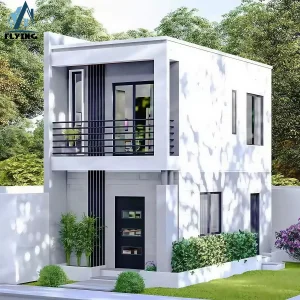
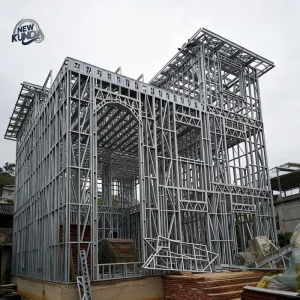
Featured Prefabricated Modular Structures
Premium architectural configurations optimized for Ghana's urban and regional housing projects, offering rapid structural execution, certified load ratings, and long-term cost benefits.
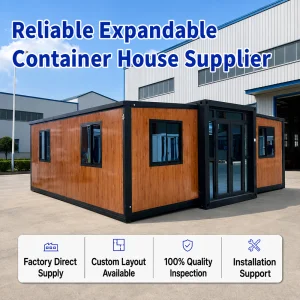
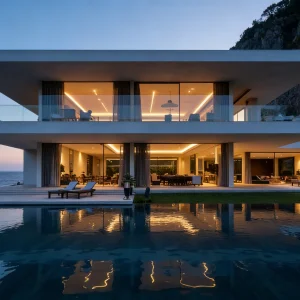
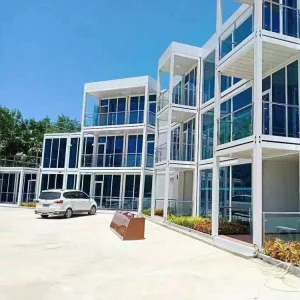
Premium architectural configurations optimized for Ghana's urban and regional housing projects, offering rapid structural execution, certified load ratings, and long-term cost benefits.
Analyzing the paradigm shift from traditional wet-concrete construction to off-site light gauge steel engineering in West Africa.
Ghana is currently undergoing rapid urbanization, led by the growth of major economic zones such as the Greater Accra Region, Kumasi Metro, and the oil-rich Western Region (Takoradi). This demographic transformation has generated an estimated housing deficit exceeding 1.8 million units. Traditional sandcrete block-and-mortar methodologies are struggling to close this gap due to lengthy build times, high local material inflation, and the volatile costs of cement and reinforcing bar steel.
Consequently, municipal authorities, developers, and private contractors are turning to factory-engineered light gauge steel framing (LGSF) and modular container buildings. These technologies slash project construction durations by up to 50% while mitigating the risks of material waste and structural inconsistency. For developers in urban centers like East Legon, Airport Residential Area, and Spintex, modular houses offer a rapid path to rental yield, bypassing the unpredictable local supply chains.
Critical Climate Resilience: Ghana's coastal zone exhibits high humidity and elevated atmospheric salinity. Standard carbon steels will rust within years. Our factory exports strictly feature hot-dip galvanized steel frames with a minimum of Z275/AZ150 anti-corrosive coating, providing long-term structural integrity in coastal environments.
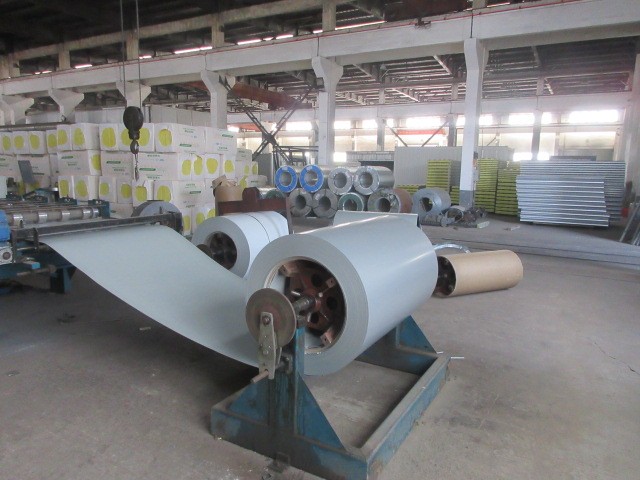
By shifting up to 90% of structural and finishing work to our precision factory in China, developers in Ghana can complete multi-story housing schemes in months rather than years, reducing financing interest costs.
Engineered to withstand coastal sea salt erosion, seismic activity along the Accra fault line, and high wind pressures during tropical storms, ensuring structural durability for over 50 years.
Utilizing high-performance Polyurethane (PU) and Rockwool core sandwich panels to minimize solar heat gain, reducing the high cooling energy demands of West Africa's tropical climate.
Aligning modular steel framing with international green building standards and modern manufacturing technologies.
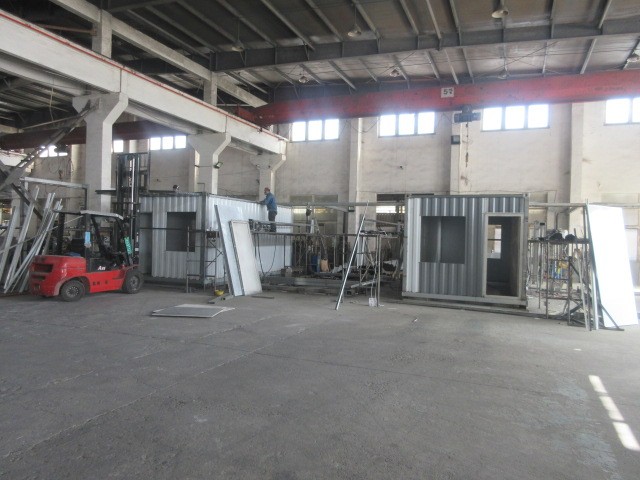
Globally, the construction industry accounts for approximately 39% of energy-related carbon emissions. This reality has catalyzed worldwide regulatory policies favoring low-carbon, recyclable construction materials. Steel stands out as the ultimate circular building material, retaining its structural properties indefinitely through infinite recycling cycles.
Additionally, the global modular construction market is experiencing rapid expansion, projected to reach over USD 140 billion by 2030. Driven by labor shortages in Western markets and infrastructure deficits in emerging economies, industrial prefabrication has evolved from a niche alternative into a mainstream architectural standard. Utilizing BIM (Building Information Modeling) pipelines, Umo House designs modular frames with millimeter-level tolerances, allowing seamless integration of electrical, plumbing, and HVAC systems directly within the structural panels before shipment.
This off-site methodology drastically minimizes municipal disruption and site disturbance, satisfying stringent ESG (Environmental, Social, and Governance) targets. For Ghanaian developers targeting international green certifications (such as IFC's EDGE or LEED), our modular steel systems provide measurable reductions in embodied energy and operational carbon footprint.
A granular look at the materials, load capacities, and thermal layers designed to resist coastal humidity, high temperatures, and structural wind stresses.
| Structural Parameter | Technical Specification Details | Specific Advantage for Ghana Projects |
|---|---|---|
| Primary Steel Frame | Q355B / Q235B Cold-Rolled Galvanized Light Gauge Steel Profiles (Standard ASTM A653) | High yield strength to resist seismic forces in Southern Ghana; resists rust. |
| Galvanization Density | Min Z275 Hot-Dip Galvanized / AZ150 Aluzinc Coating (275g/m²) | Essential anti-corrosion barrier for coastal Accra, Tema, and Sekondi-Takoradi. |
| Wall Insulation core | 75mm/100mm/120mm High-Density Rockwool or Polyurethane (PU) Sandwich Panels | Superior thermal envelope (R-value up to 3.5), lowering AC energy consumption. |
| Wind Load Capacity | Designed to resist wind speeds up to 250 km/h (Class 1 Category) | Resists severe tropical squalls and coastal monsoonal winds. |
| Fire Rating | Grade A Non-combustible Core (Rockwool); Class B1 Flame Retardant (PU/PIR) | Provides multi-hour fire containment barriers for municipal compliance. |
| Seismic Resistance | Calculated up to Magnitude 8 (Zone 4 equivalents) | Vital structural safeguard for building zones within active fault lines near Accra. |
Tropical climates require specialized insulation strategies. Traditional concrete structures absorb massive amounts of daytime solar radiation and slowly release heat during the evening, requiring continuous air conditioning. Umo House modular panels utilize a thermal break design. By incorporating high-density, closed-cell Polyurethane (PU) cores or mineral Rockwool inside double-sided steel skins, we create an envelope that stops exterior heat transmission.
Our roofing configurations feature an integrated ventilation cavity beneath the exterior pre-painted galvanized steel sheet, reflecting solar radiation before it reaches the interior living spaces. Additionally, double-glazed low-emissivity (Low-E) glass panels are standard for our modular doors and windows, significantly reducing heat loading from direct sunlight while maximizing natural daylighting.
From rural mining camps to premium urban commercial hubs, modular steel meets diverse development requirements.
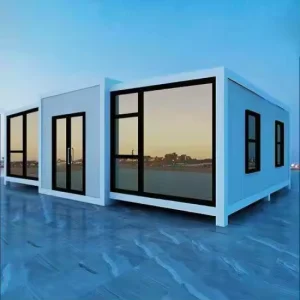
Municipalities in Accra and Kumasi can leverage flat-pack and expandable container systems to deploy high-density, multi-family housing projects rapidly, providing dignified living spaces with clean electrical and sanitary plumbing pre-installed.
For the mineral mining districts of Tarkwa, Obuasi, and Wassa, we engineer rugged, rapidly relocatable modular dormitories, administrative offices, mess halls, and security posts designed for long life cycle utility under heavy forest/savanna conditions.
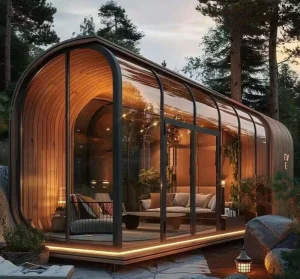
Our luxury light steel structures and capsule cabins provide boutique resorts along the Volta River, Akosombo, and Busua Beach with contemporary, low-impact architectural footprints that preserve the surrounding natural landscapes.
Agriculture remains a key component of Ghana's economy. The demand for modern post-harvest infrastructure, processing sheds, and animal husbandry buildings is rising. Traditional concrete structures are often slow to construct in remote rural locations.
Our prefabricated agricultural structures are optimized for easy transport to rural regions. These structures are pre-engineered to resist localized humidity and insect attacks (such as termites, which destroy wood-framed sheds). Whether for livestock housing, cold-chain storage, or grain warehouses, our light-gauge steel framing offers rapid assembly and clean interior environments that meet international agricultural sanitation standards.
Streamlined logistics frameworks that minimize shipping volume, control freight costs, and ensure zero-damage arrivals at Tema or Takoradi ports.
Long-distance maritime logistics require optimized packing designs. Our flat-pack container houses are built to international ISO dimensions. Up to four flat-pack pods can be bundled together to form the footprint of a standard 20ft shipping container, significantly reducing sea freight costs. For larger villas and structural skeletons, components are pre-coded and packed in bundles, matching our detailed structural drawing indexes for customs clearance at Tema Port.
Umo House assists developers throughout the process by providing detailed commercial invoices, packing lists, structural calculations, and CE/ISO certifications. This simplifies the import clearance process with the Ghana Revenue Authority (GRA). Upon arrival at the construction site, the color-coded profiles and pre-drilled assembly points allow local labor teams to erect the structures using standard hand tools and minimal crane power.
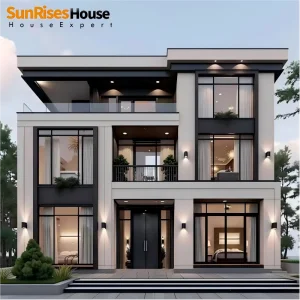
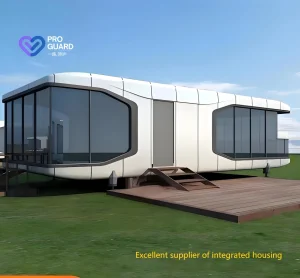
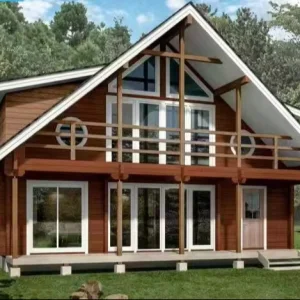
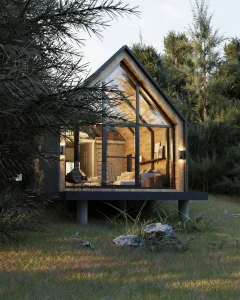
Explore our extensive line of durable light gauge steel frame residential and commercial buildings, engineered for rapid assembly and customized to your local specifications.
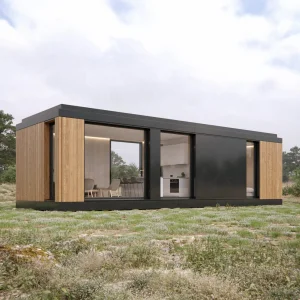
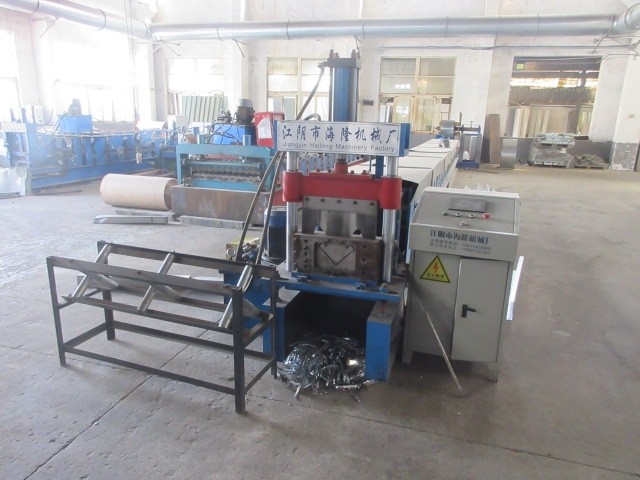
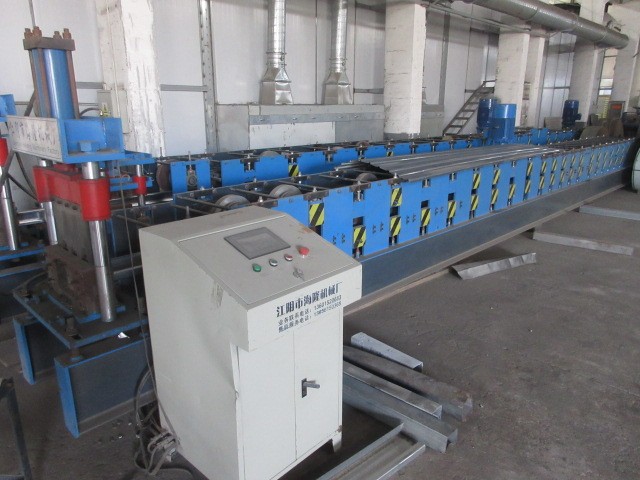
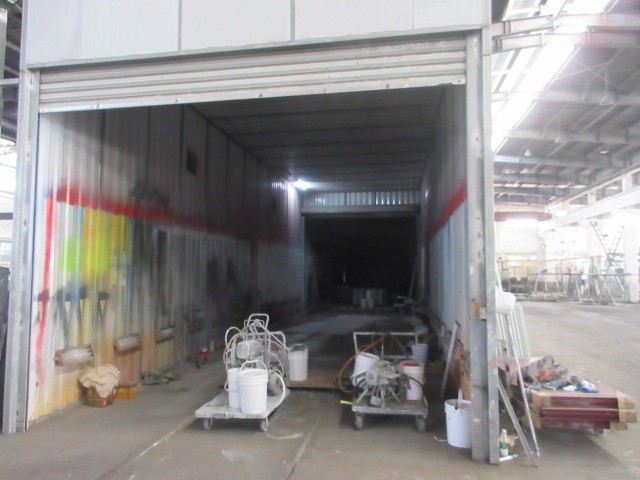
Examine our manufacturing floor, precise welding operations, and prefabricated module assemblies inside our Chinese industrial facilities.
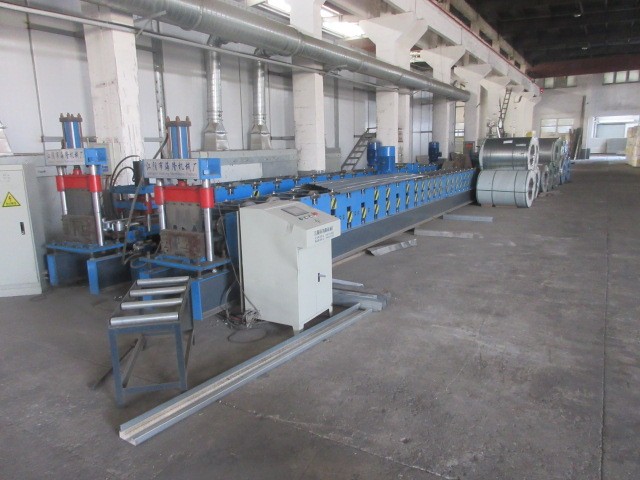
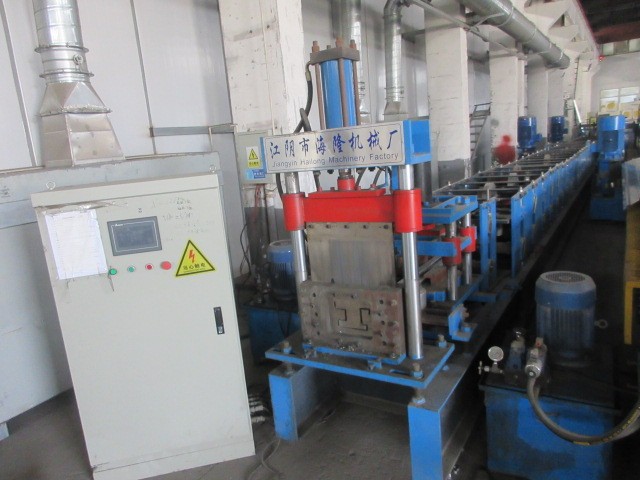

Foshan Umo House Co., Ltd. is a professional manufacturer specializing in steel structure houses, prefabricated steel buildings, modular housing systems, and customized construction solutions in China. With extensive industry experience and advanced manufacturing capabilities, we provide durable, efficient, and sustainable building solutions for residential, commercial, industrial, and institutional projects worldwide.
Our comprehensive product portfolio includes steel structure houses, prefabricated homes, modular buildings, steel frame villas, portable houses, expandable homes, labor camps, site offices, warehouses, workshops, commercial buildings, schools, hospitals, dormitories, agricultural buildings, and customized steel construction projects. Every solution is engineered to deliver rapid installation, superior structural performance, cost efficiency, and long service life.
At Umo House, we utilize advanced production equipment and precision manufacturing technologies to ensure every component meets strict international quality standards. Our experienced engineering team provides complete OEM and ODM services, supporting customized architectural design, structural calculations, insulation systems, roofing, wall panels, electrical layouts, plumbing, interior finishing, and project-specific requirements.
Built with premium galvanized steel structures and high-performance building materials, our products offer excellent resistance to corrosion, earthquakes, strong winds, and harsh weather conditions. They also provide outstanding thermal insulation, energy efficiency, and low maintenance, making them suitable for both temporary and permanent construction applications.
Our steel structure solutions are widely used in residential communities, commercial complexes, industrial facilities, logistics centers, mining camps, construction sites, tourism resorts, educational institutions, healthcare projects, government infrastructure, and emergency relief programs. We continuously invest in research, product innovation, and manufacturing optimization to meet the evolving needs of global customers.
Today, Foshan Umo House exports its products to Europe, North America, South America, Southeast Asia, the Middle East, Africa, and Oceania, building long-term partnerships with contractors, developers, distributors, and engineering companies around the world.
Addressing key engineering, importation, permitting, and structural performance queries for developers in West Africa.
Yes. Our modular steel houses and light gauge structures are designed to comply with BS 5950 (British Standard for structural steelwork) and Eurocode 3, which form the base framework for structural approvals by the Ghana Standards Authority (GSA) and Metropolitan Assemblies (such as AMA and KMA).
We apply a hot-dip galvanization layer with a minimum density of Z275 (275 grams of zinc coating per square meter) or use AZ150 Aluzinc frames. This creates a dense sacrificial layer that prevents humidity and airborne sea salt from contacting the structural carbon steel, offering rust resistance for over 50 years.
For standard flat-pack and expandable houses, a simple concrete slab-on-grade (thickness of 100mm to 150mm) or strip footings under the load-bearing columns are sufficient. For sites in regions with expansive clay soils (like Accra plains), we recommend consulting our engineering team to design appropriate pile foundations or reinforced raft foundations.
Shipping from our Foshan factory to Tema Port typically takes 35 to 45 days. We compile and dispatch all required documentation, including the Bill of Lading, Commercial Invoice, Packing List, and Factory Test Certificates, to facilitate clearing by your local clearing agents via the Integrated Customs Management System (ICUMS).
Yes. Our expandable container homes and flat-packs are specifically engineered for simple manual installation. An expandable 20ft house can be erected by 4 workers in under 2 hours using standard tools. For larger multi-story light steel villas, we provide step-by-step structural CAD diagrams, video guides, and can deploy supervisory engineers to guide your construction team on-site.
We utilize low-thermal-conductivity Polyurethane (PU) sandwich panels that serve as thermal breaks. Additionally, the structural roofs incorporate reflective coatings and roof ventilation caps that exhaust warm rising air, keeping interior spaces cooler and reducing the cooling load on HVAC systems.
Whether you are planning a resort along the Volta River, a worker camp in the Western Region mining districts, or an urban residential development in Accra, our engineering team can customize modular solutions to your target budget.