Umo House
1. Executive Summary & Geotechnical Realities of Kathmandu Valley
The urban landscape of Kathmandu, located in a high-intensity seismic zone (Zone V under Nepal National Building Code NBC 105:2020), faces acute structural engineering challenges. Rapid urban population growth around the Kathmandu Ring Road, coupled with soft lacustrine soil conditions prone to ground motion amplification and liquefaction during seismic events, has created an urgent demand for advanced structural engineering solutions.
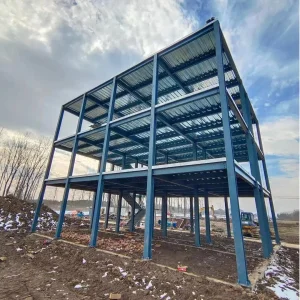
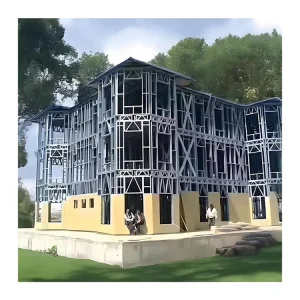
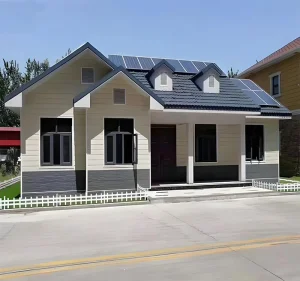
Traditional Reinforced Concrete Structure (RCC) and unreinforced masonry buildings carry immense dead-weight, rendering them extremely vulnerable to lateral shear forces during earthquakes. As leading international prefabricated steel house manufacturers serving Kathmandu, Foshan Umo House Co., Ltd. delivers engineered, light-weight, high-ductility cold-formed steel (CFS) and structural steel space frames designed specifically to neutralize these geotechnical risks while delivering rapid, cost-controlled deployment.
Information Gain Technical Insight: Steel modular construction reduces the total structural mass by 60% compared to equivalent cast-in-place concrete structures. In accordance with Newton's second law ($F=ma$), reducing building mass dramatically decreases seismic force inertia during high-magnitude tectonic disturbances along the Himalayan thrust fault system.
2. Global Market Dynamics & The Himalayan Infrastructure Shift
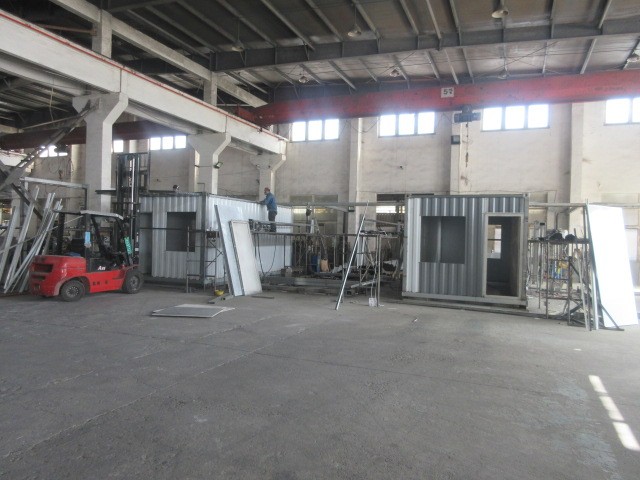
Globally, the architecture, engineering, and construction (AEC) sector is undergoing a profound paradigm shift toward Off-site Construction (OSC) and Design for Manufacture and Assembly (DfMA). Key macro-drivers accelerating the adoption of prefabricated steel systems in developing metropolitan regions like Kathmandu include:
- Severe Supply Chain Volatility of Raw Materials: Local cement and aggregate shortages in Nepal often stall traditional construction projects. Prefabricated steel systems are pre-engineered in precision factory environments, guaranteeing fixed material inputs and predictable timelines.
- Escalating Urban Land Costs in Kathmandu: High real estate prices in areas like Lalitpur, Bhaktapur, and central Kathmandu demand swift monetization of land assets. Modular steel erection reduces project delivery cycles by 50% to 70%, drastically accelerating return on investment (ROI) for commercial and residential developers.
- Severe Climate Resiliency Requirements: The monsoon season brings heavy precipitation and humidity. Modern steel framing equipped with vapor-permeable membranes, high-density rockwool, and PU sandwich panels ensures superior thermal dynamics and damp-proofing.
3. China Industry 4.0: Supply Chain Resilience & Manufacturing Precision
Foshan Umo House Co., Ltd. leverages the unparalleled industrial cluster strength of Guangdong Province—China’s premier steel fabrication and modular building export hub. Our Industry 4.0 production ecosystem establishes new benchmarks for international steel structural manufacturing:
BIM & Automated Roll Forming
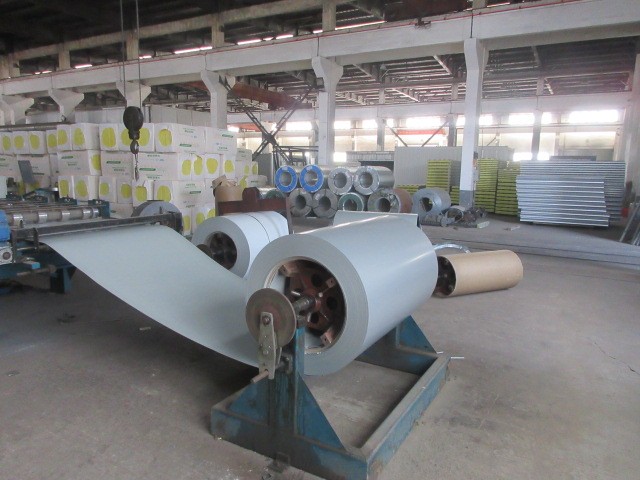
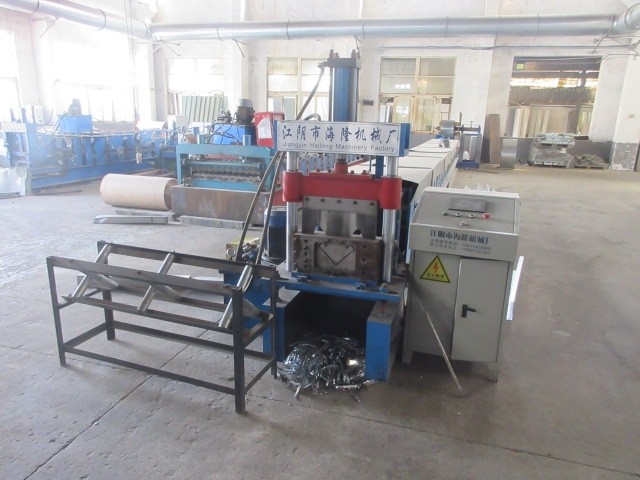
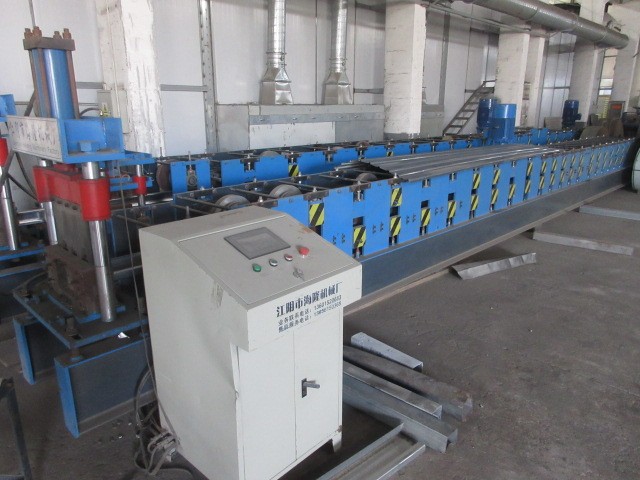
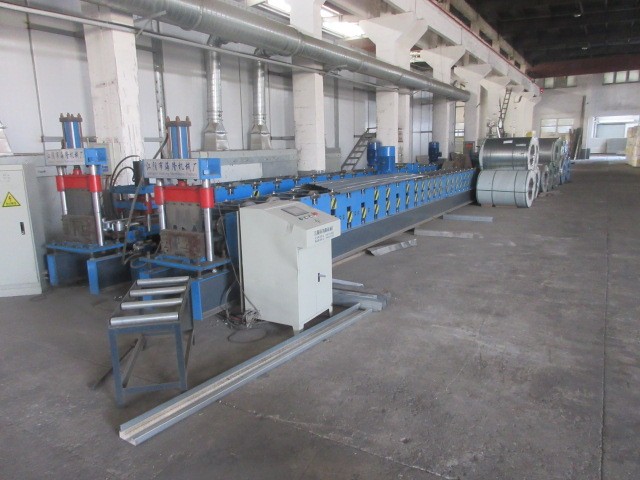
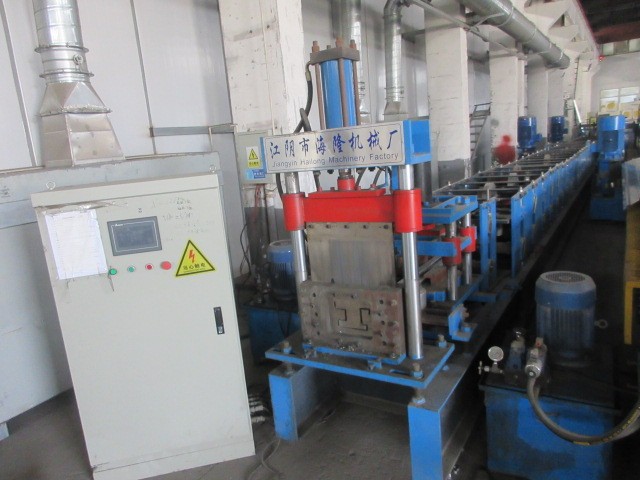
3D Building Information Modeling (BIM) directly drives automated FrameCAD and Vertex BD roll-forming lines, ensuring zero-tolerance manufacturing accuracy down to 0.5mm.
Advanced Galvanization
Hot-dip galvanizing with Z275/AZ150 zinc coating yields superior corrosion protection capable of resisting atmospheric moisture, chemical degradation, and oxidation.
Overland & Sea Logistics
Optimized flat-pack and containerized packaging optimized for multi-modal transit: Ocean shipment to Kolkata/Visakhapatnam, followed by direct transit via Birgunj Dry Port to Kathmandu.
4. Localized Structural Application Scenarios in Nepal
Our engineered prefabricated steel systems serve distinct sector requirements throughout Kathmandu Valley and neighboring regional hubs:
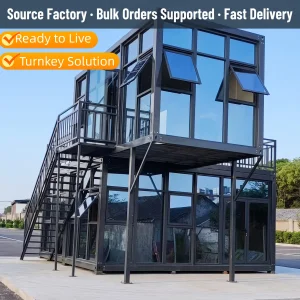
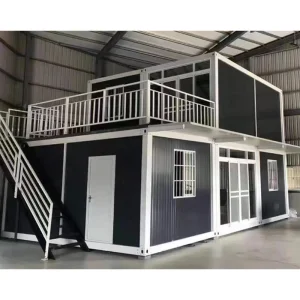
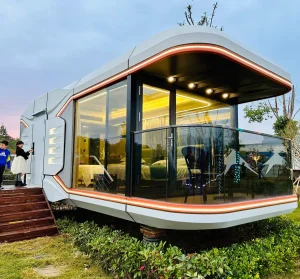
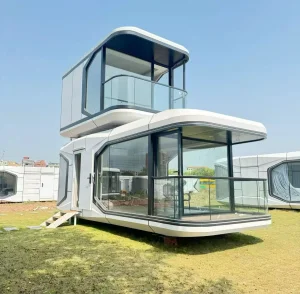
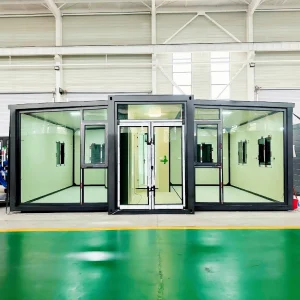
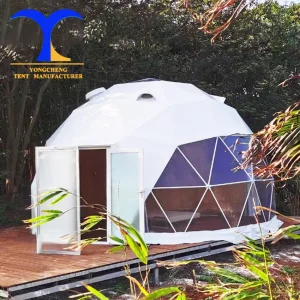
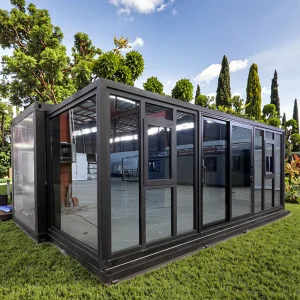
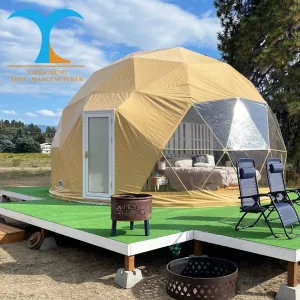
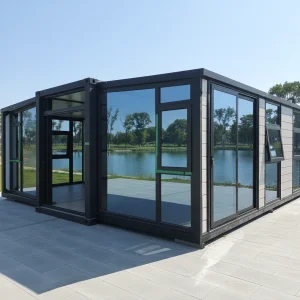
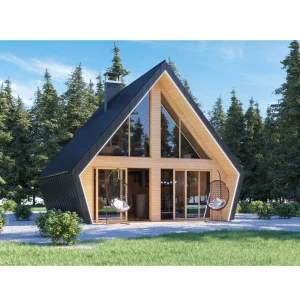
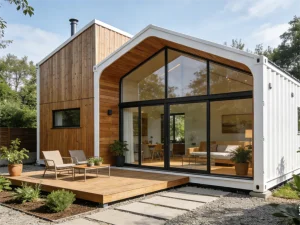
- High-Altitude Eco-Resorts & Hospitality (Nagarkot, Dhulikhel, Pokhara): Rapidly installable luxury expandable container units, dome cabins, and light-steel luxury villas that minimize site disturbance on sensitive mountain slopes.
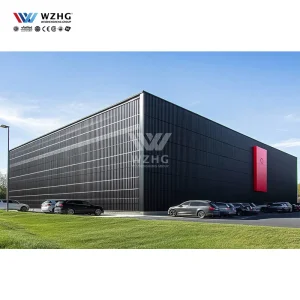
- Industrial Logistics & Warehousing Depots: Heavy structural space frames and clear-span portal frame kits catering to the expanding logistics hubs along the Kathmandu-Terai Fast Track corridor.
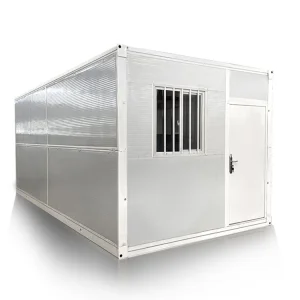
- Commercial Office & Multi-Story Urban Infill: Space-efficient, expandable modular buildings for temporary corporate offices, institutional sites, and urban rooftop expansions in high-density zones.
- Emergency Preparedness & Healthcare Facilities: Modular relief shelters, mobile hospitals, and field office units capable of being fully deployed within days of natural disasters.
5. Technical Specifications: Structural Steel vs. Traditional Concrete
Below is a technical engineering comparison highlighting why prefabricated steel framing provides significant technical and financial advantages for contractors and project developers operating in Kathmandu.
| Performance Vector | Umo House Light Steel Framing (CFS) | Standard Heavy Structural Steel | Traditional Concrete Masonry (RCC) |
|---|---|---|---|
| Seismic Resistance | Exceptional (Zone V / Richter 8.5+) | High Structural Ductility | Poor (Brittle, high risk of shear failure) |
| Construction Velocity | Ultra-Fast (30-45 days turnkey) | Fast (60-90 days) | Slow (9-18 months) |
| Foundation Requirement | Light slab / isolated piers (60% lighter) | Medium-duty reinforced footing | Deep heavy foundation required |
| Thermal & Acoustic Insulation | Superior (U-Value < 0.25 W/m²K) | Requires added insulation layering | Poor (High thermal mass, slow heat dispersal) |
| Transportability to Remote Sites | Flat-packed, high volume per container | Requires heavy cranes / transport | Laborious bulk raw material transport |
| Environmental & Sustainability Rating | 100% Recyclable, Zero-Water Construction | High recyclability grade | High carbon footprint, heavy water consumption |