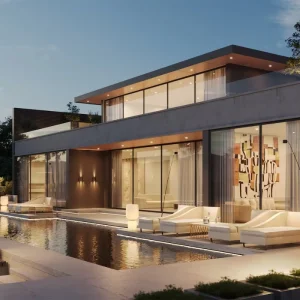
Pre-engineered multi-story developments and luxury custom villas built to withstand earthquake actions in the Valley of Mexico.
Mexico City (CDMX) represents one of the most demanding engineering environments globally. Situated in an endorheic basin on a historical lake bed (the Valley of Mexico), the soil consists mainly of highly compressible saturated clay layers (Zone III - Lacustrine Zone). When seismic events originate from the Pacific coast subduction zones, these clay profiles exhibit high amplification coefficients, putting traditional heavy masonry and cast-in-place concrete structures at severe risk of structural failure due to inertia forces.
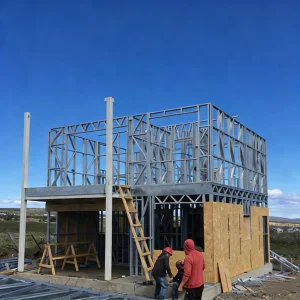
Because structural weight is directly proportional to seismic base shear force ($V_b = C_s \cdot W$), construction methods utilizing Light Gauge Steel Frame (LGSF) and heavy steel structural systems present the ultimate engineering path forward. By substituting traditional materials with cold-formed steel and engineered shear wall panels, designers can decrease building dead load by up to 65%. This reduction dramatically minimizes soil settlement risks and dynamic seismic loading coefficients, aligning perfectly with the stringent requirements of the Reglamento de Construcciones de la Ciudad de México and its associated Normas Técnicas Complementarias (NTC).
Geotechnical & Structural Advantage: A light steel structure combined with autoclaved aerated concrete (AAC) panel cladding provides not only structural redundancy under seismic conditions but also high damping capacities that dissipate kinetic energy safely without ductile failure.
Furthermore, Mexico City is experiencing an urban evolution. The municipality's policies around densification require speed of execution, noise reduction during construction, and dry assembly methods. Prefabricated steel villas, structural multi-family units, and modular capsule developments offer the ideal solution. Developers in exclusive zones like Santa Fe, Polanco, Lomas de Chapultepec, and secondary growth centers like Huixquilucan can accelerate construction schedules by 60% compared to typical concrete slab and brickwork solutions.
Key technical parameters comparing traditional concrete frame construction against pre-engineered steel villa systems.
Foshan Umo House Co., Ltd. is a leading manufacturer specializing in steel structure houses, prefabricated steel buildings, modular housing systems, and customized construction solutions in China. With extensive industry experience and advanced manufacturing capabilities, we provide durable, efficient, and sustainable building solutions for residential, commercial, industrial, and institutional projects worldwide.
Our comprehensive product portfolio includes steel structure houses, prefabricated homes, modular buildings, steel frame villas, portable houses, expandable homes, labor camps, site offices, warehouses, workshops, commercial buildings, schools, hospitals, dormitories, agricultural buildings, and customized steel construction projects. Every solution is engineered to deliver rapid installation, superior structural performance, cost efficiency, and long service life.
At Umo House, we utilize advanced production equipment and precision manufacturing technologies to ensure every component meets strict international quality standards. Our experienced engineering team provides complete OEM and ODM services, supporting customized architectural design, structural calculations, insulation systems, roofing, wall panels, electrical layouts, plumbing, interior finishing, and project-specific requirements.
Built with premium galvanized steel structures and high-performance building materials, our products offer excellent resistance to corrosion, earthquakes, strong winds, and harsh weather conditions. They also provide outstanding thermal insulation, energy efficiency, and low maintenance, making them suitable for both temporary and permanent construction applications.
Our steel structure solutions are widely used in residential communities, commercial complexes, industrial facilities, logistics centers, mining camps, construction sites, tourism resorts, educational institutions, healthcare projects, government infrastructure, and emergency relief programs. We continuously invest in research, product innovation, and manufacturing optimization to meet the evolving needs of global customers.
Today, Foshan Umo House exports its products to Europe, North America, South America, Southeast Asia, the Middle East, Africa, and Oceania, building long-term partnerships with contractors, developers, distributors, and engineering companies around the world.
Our steel villas integrate advanced materials and system controls designed to comply with local microclimates and seismic standards.
Our light gauge steel (LGS) profiles utilize ASTM A653 steel with minimum yield strengths of 345 MPa to 550 MPa, ensuring high elasticity and ductility under seismic waves.
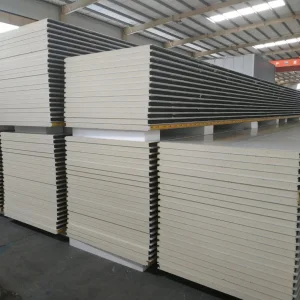
Integrated PU sandwich panels and ALC (Autoclaved Lightweight Concrete) slabs control heat transfer, critical for the high-altitude diurnal temperature swings of Mexico City.
Hot-dip zinc coating (minimum 275 g/m²) blocks atmospheric oxidation. The framing maintains its structural integrity even in highly humid micro-environments in Lake Texcoco zones.
Pre-engineered structural framing panels are embedded with conduit pipes for electrical and PEX sanitary piping at our manufacturing floor in Foshan, eliminating onsite chases.
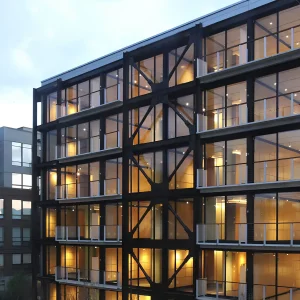
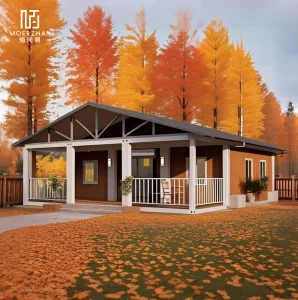
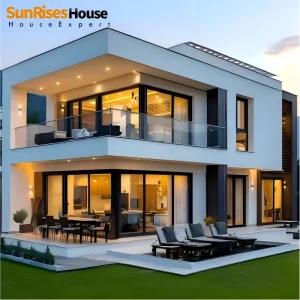
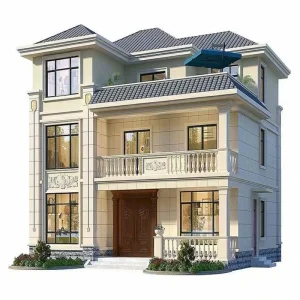
These light-gauge and heavy steel structures are optimally suited for modern multi-story houses in residential zones.
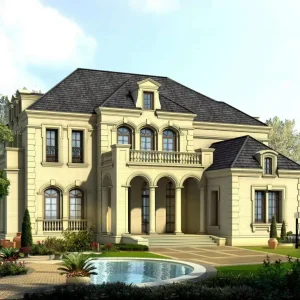
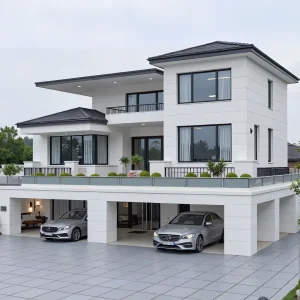
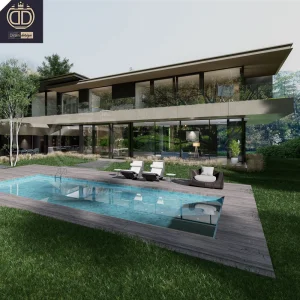
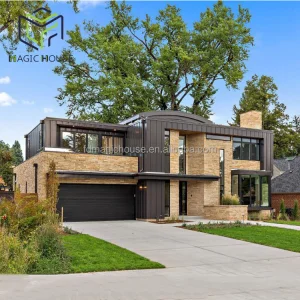
Modern developers targeting industrial complexes, mixed-use buildings, and real estate communities in central Mexico must focus on performance properties. Traditional hollow brick walls do not offer adequate sound transmission class (STC) ratings or standard thermal boundary values. Integrating Umo House's Light Gauge Steel Villa solutions offers customized options for structural design:
| Structural Parameter | Specification Detail | Compliance Standards |
|---|---|---|
| Steel Frame Material | Q550 / Q345 / S350GD (High-tensile structural steel) | ASTM A653, EN 10346, GB/T 2518 |
| Zinc Coating Class | Z275 / AZ150 (Corrosion-resistant barrier) | ISO 9223 C3-C4 Environment |
| Thermal Conductivity (U-Value) | 0.22 - 0.35 W/m²·K (Depending on cladding selection) | ASHRAE 90.1, Mexican NOM-020-ENER |
| Seismic Design Limits | Spectral acceleration coefficient capability up to Sa = 1.2g | NTC-2023 (Mexico City Building Code) |
| Wind Load Resistance | Up to 240 km/h structural resistance limit | Category IV Exposure Class |
| Fire Resistance | 1 to 4 hours partition ratings (AAC/Glasswool/Gypsum systems) | ASTM E119 / UL 263 |
Using our prefabricated configurations, engineers can design and optimize foundations. Instead of digging deep foundation pits or pouring massive reinforced concrete pads on soft soils, developers can use light ring-beam slabs or screw-pile systems. This minimizes excavation impacts, prevents surrounding soil settlements, and speeds up structural handovers.
As Mexico continues to experience a major industrial boom driven by nearshoring, the demand for fast-track modular developments is rising. Prefabricated steel frame villas are no longer restricted to residential projects. Our portfolio targets four specific segments in the local market:
1. Nearshoring Industrial Hub Housing & Administrative Complexes: In the industrial belts surrounding Querétaro, Toluca, and San Luis Potosí, international manufacturers require fast site offices, administrative villas, and staff accommodation blocks. Our modular light steel layouts deploy in weeks, bypassing slow domestic construction timelines.
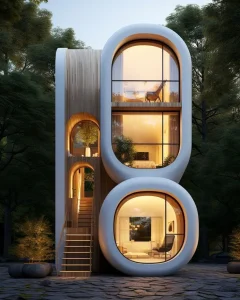
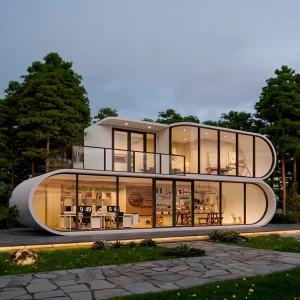
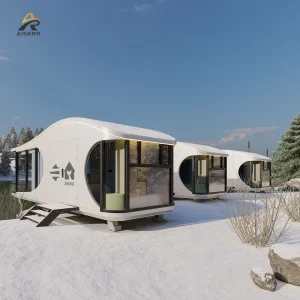
2. Eco-Resort and Luxury Glamping Developments: Destinations such as Valle de Bravo, Tepoztlán, and the vineyard corridors of Querétaro and San Miguel de Allende have high demand for premium, low-impact tourist lodgings. Our modular capsule houses and smart camping pods integrate easily into sensitive natural environments without heavy site excavation.
3. High-Density Micro-Apartments: Urban densification in central neighborhoods like Roma, Condesa, and Cuauhtémoc calls for rooftop additions and infill construction. The low self-weight of light gauge steel allows developers to add extra floors to existing concrete frame buildings without violating foundation loading constraints.
Inside Foshan Umo House's factory floor: From cold-forming structural elements to finalized packaging and loading systems.
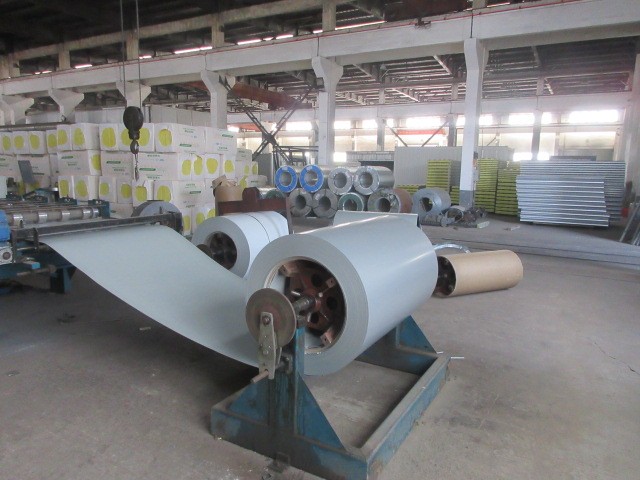
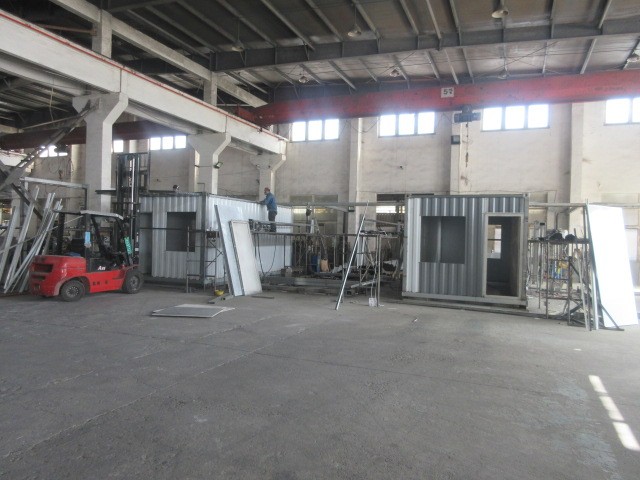
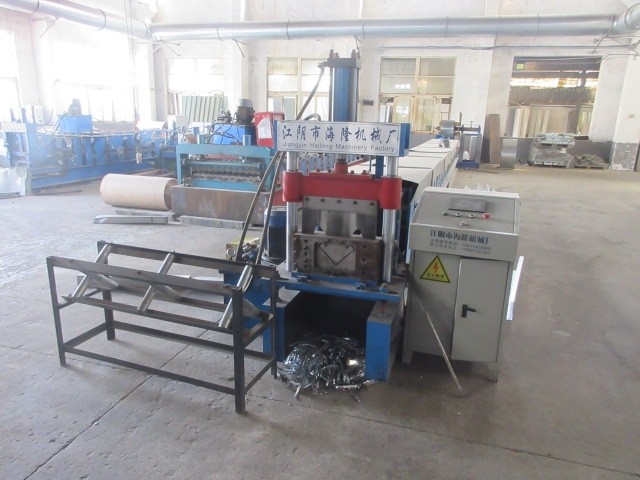
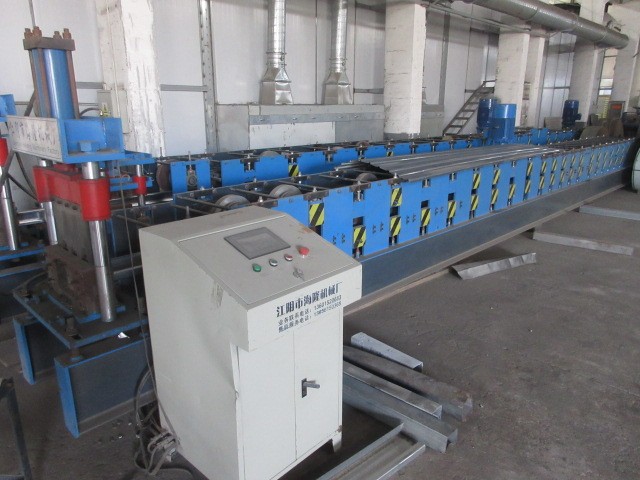
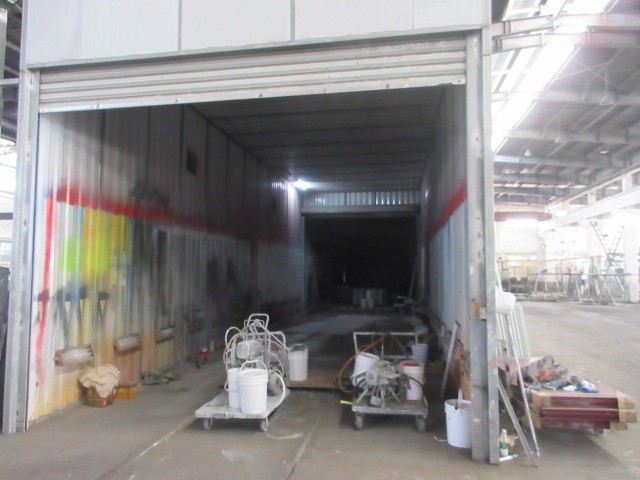
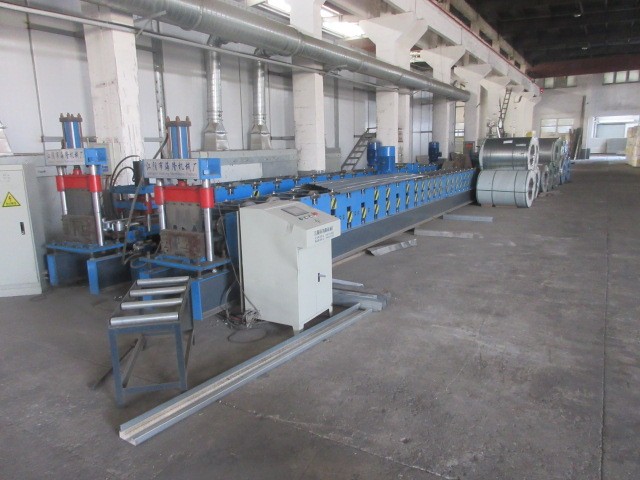
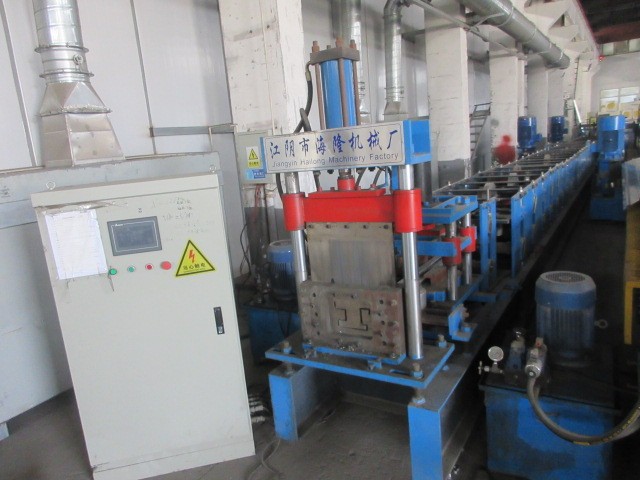
Importing light steel frames and modular villas from China to Mexico requires careful logistics planning. As an experienced exporter, Foshan Umo House streamlines this process through the following steps:
Structural Customization & Engineering Verification: Our design office works directly with local Mexican engineers of record. We export architectural plans into CAD formats and calculate load resistances to comply with Mexican NTC rules. Once approved, the profiles are manufactured.
Logistics, Container Optimization, and Port Delivery: Prefabricated panels and frame parts are bundled, labeled with unique tracking codes, and flat-packed into standard 40ft High Cube (HC) ocean containers. We coordinate shipments from ports in Guangdong (Nansha, Shenzhen) directly to Pacific ports like Manzanillo or Lázaro Cárdenas, which are optimal for onward trucking to Mexico City.
On-Site Assembly Support: We supply a complete set of installation drawings, structural nodes, and instruction videos. For large-scale projects, we can send a structural engineer to the job site to manage local crews and ensure correct construction procedures.
Detailed answers addressing the primary concerns of developers, structural engineers, and real estate buyers.
Light gauge steel frame (LGSF) villas perform exceptionally well in seismic zones. Their high strength-to-weight ratio reduces inertia forces by up to 65% compared to concrete. Furthermore, the structural joints are fastened with self-tapping screws and chemical anchors, providing a flexible framework that absorbs and dissipates ground motion energy without sudden failure.
Yes. Umo House's design processes align with international building codes (IBC) and AISI standards. We work closely with local Mexican structural directors (Corresponsables en Seguridad Estructural) to adjust wall and column load-bearing models to fully comply with the Normas Técnicas Complementarias (NTC-2023) of Mexico City.
We insulate our walls using high-density PU foam, rock wool, and fiber cement or AAC panel claddings. This creates an airtight thermal envelope with low thermal transmittance (low U-value). It keeps the interior comfortable during daytime heat and retains warmth during the cold nights common in high-altitude regions like Mexico City.
Our framing materials are protected with hot-dip galvanization (minimum Z275 grade or AZ150 zinc-aluminum coating). This provides decades of active corrosion protection. The designed structural service life exceeds 50 years under standard environmental conditions, requiring minimal structural maintenance.
We load the flat-packed steel panels and prefabricated modules into standard 40ft HC containers at our factory in Foshan. The containers are shipped to the Port of Manzanillo or Lázaro Cárdenas, and then delivered by truck to the project site in Mexico City or surrounding states. The transit time is typically 25 to 35 days.
Absolutely. Our architectural and design engineers support full OEM and ODM services. We translate 3D Max concepts, CAD layouts, and architectural sketches into roll-forming machine instructions. This allows us to manufacture complex, modern, and luxury custom homes exactly as designed.
Explore our full line of customizable structural steel cabins, container systems, and residential villas.
Get detailed structural analysis, structural sizing models, cost estimations, and shipping solutions from our engineering team in Foshan.
Send Inquiry Now Umo House