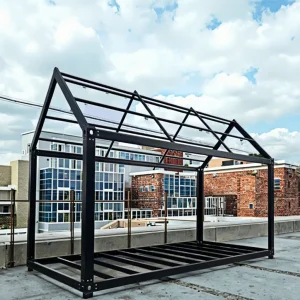
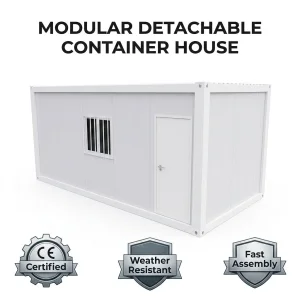
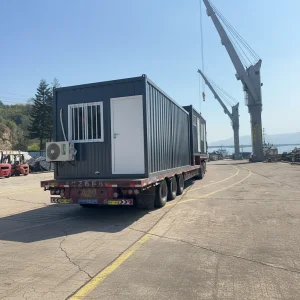
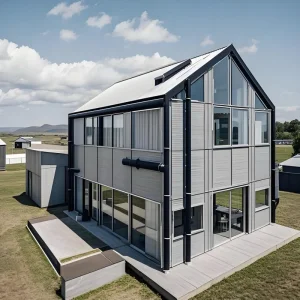
Discover our primary configuration systems optimized for Northern Germany’s residential, light commercial, and port-area projects.
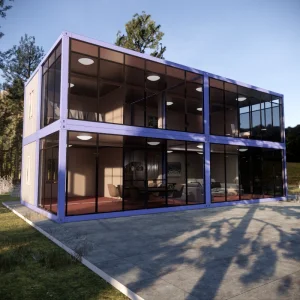
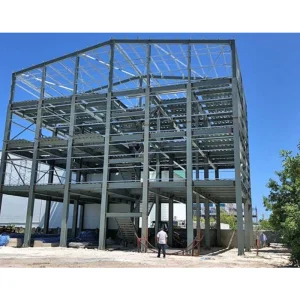
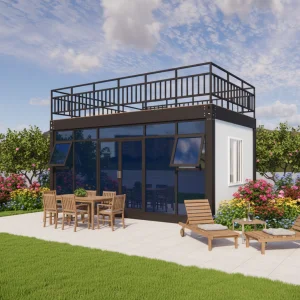
The Free and Hanseatic City of Hamburg is a major European transport hub, characterized by Germany's largest seaport, dynamic industrial zones, and a highly demanding maritime climate. For developers, municipal authorities, and industrial general contractors in Hamburg, building design must satisfy two competing constraints: severe atmospheric corrosivity and the strict energy efficiency requirements dictated by the German Building Energy Act (Gebäudeenergiegesetz - GEG).
Due to close proximity to the North Sea, Hamburg experiences high relative humidity and salty maritime air, categorizing structural steel installations in local ports and industrial areas (such as Steinwerder, Waltershof, and Harburg) under corrosive classifications up to C4 or C5 according to DIN EN ISO 12944. Standard light steel configurations risk premature red rust. This is where high-quality hot-dip galvanized steel framing solutions from Foshan Umo House Co., Ltd. provide unmatched security.
Furthermore, Germany's push towards decarbonization and modular construction has transformed urban planning in the Hamburg Metropolitan Region. The city’s strict structural safety codes demand structural designs verified to Eurocode 3 (DIN EN 1993) for wind load zone 2 (and zone 3 in coastal sections). Under the pressure of acute urban housing shortages, project developers are shifting from wet-concrete workflows to off-site prefabricated galvanized steel modular frames. This shift dramatically reduces on-site erection time, noise pollution, and waste in densely built quarters like Altona or Eimsbüttel.
Foshan Umo House supports Hamburg developers by exporting pre-engineered, customized light-gauge and heavy steel structural packages. These solutions are specifically optimized for marine structural health, logistical ease through the Port of Hamburg, and local German assembly workflows.
Our engineering team matches components to German and European standards to ensure hassle-free approval and long-term performance.
All steel components are hot-dip galvanized to Z275 (275g/m² zinc thickness on both sides) or custom Z350/Z450 grades, complying with DIN EN ISO 1461. This ensures a life expectancy exceeding 50 years without paint maintenance, even within salt spray ranges near Hamburg Harbor.
Our light gauge steel (LGS) systems employ high-strength cold-formed steel (S250GD to S350GD+Z) modeled via BIM. This ensures compliance with structural Eurocodes, guaranteeing wind load capacity up to wind zone 3 (velocities up to 27.5 m/s) and typical snow load zones.
We prevent thermal bridging—a key issue with steel houses in cold climates—by utilizing advanced exterior insulation finishing systems (EIFS) with rock wool or polyisocyanurate (PIR) cores, helping projects meet German GEG U-value standards.
| Performance Indicator | Requirement for Hamburg, Germany | Foshan Umo House Specifications | European Standards Applied |
|---|---|---|---|
| Galvanization Weight | Min. 275 g/m² for Class C3/C4 | Z275, Z350 up to Hot-dip galvanized frame (G60 / G90) | DIN EN ISO 1461 / DIN EN 10346 |
| Wind Resistance | Wind Zone 2-3 (Coastal/Urban mixed) | Designed up to 120-150 km/h wind loads | DIN EN 1991-1-4 (Eurocode 1-4) |
| Structural Execution | Execution Class EXC1 / EXC2 | Automated robotic welding & CNC drilling | DIN EN 1090-1/2 (CE Marking) |
| Wall Thermal Insulation (U-value) | ≤ 0.24 W/(m²·K) for residential walls | PIR / Rockwool sandwich systems + fiber cement boards | GEG (Gebäudeenergiegesetz 2020/2024) |
| Fire Safety Rating | F30 / F60 structural integrity requirements | Non-combustible steel frame + fireproof gypsum wall boards | DIN 4102-1 / EN 13501-1 Class A1/A2 |
We customize structural designs to fit specific regulatory and regional project demands across Germany.
Rapidly deployable, salt-resistant modular site offices, operations rooms, and gatehouses in Altenwerder and Wilhelmsburg. High rigidity allows stacked multi-story builds on limited quay space.
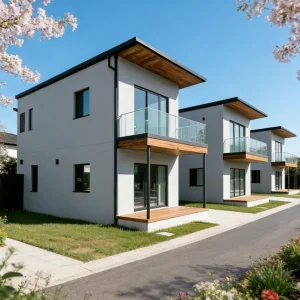
Cost-efficient modular light steel apartments optimized for the Hamburg-Harburg university district. Integrated acoustic membranes isolate room-to-room noise according to German DIN 4109.
Due to the light deadweight of galvanized steel frames, our structures are ideal for vertical densification (Aufstockung) of existing apartment buildings in Eimsbüttel without foundation reinforcement.
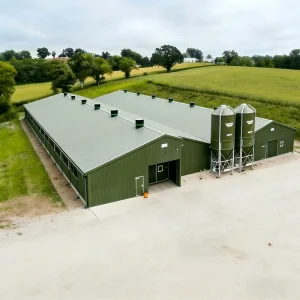
In Hamburg's rural outskirts like Vierlande, we provide high-durability, hot-dip galvanized frame structures for agricultural storage, sorting houses, and farm operations that withstand high humidity.
Foshan Umo House Co., Ltd. is positioned in Guangdong Province, China's premier hub for advanced metallic fabrication and modular construction technologies. By sourcing high-grade steel plates from tier-1 state-owned steel manufacturers and maintaining internal control over the galvanization and cold roll-forming processes, we guarantee price stability and quality control that local European manufacturers cannot match.
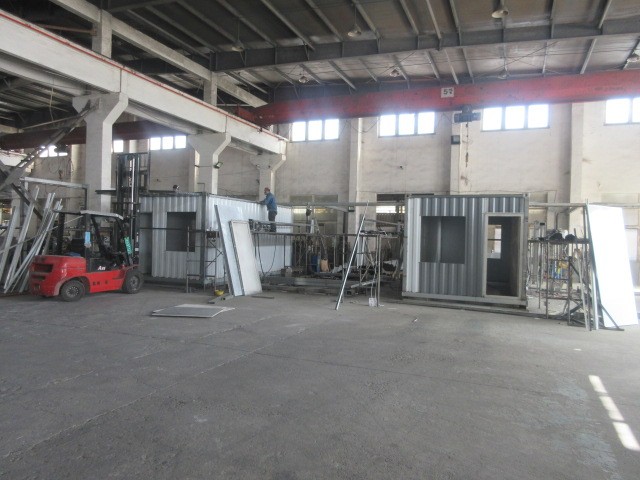
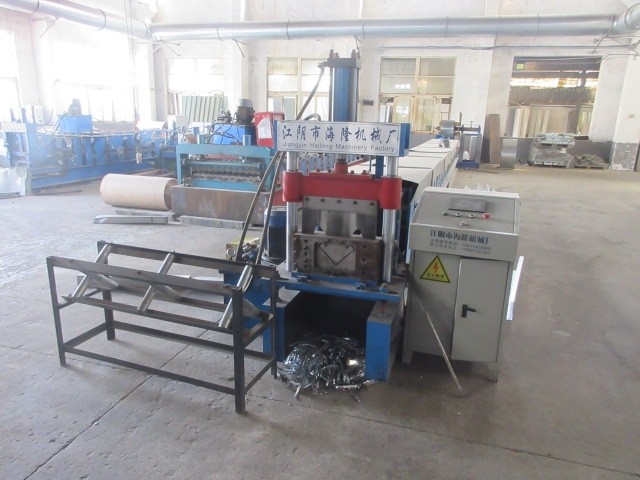
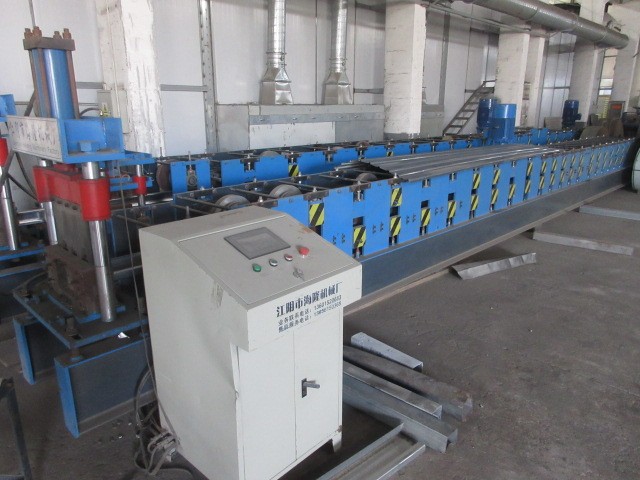
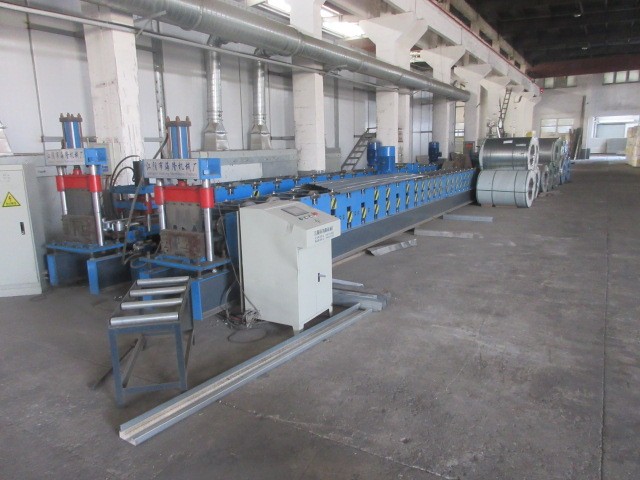
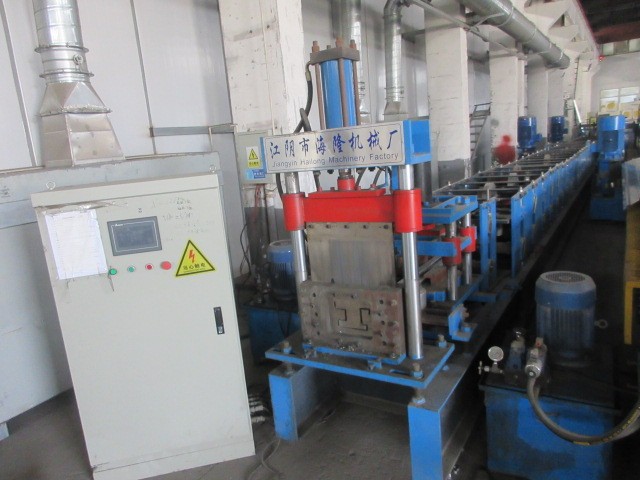
Our automated manufacturing facilities allow us to process complex architectural steel framing details directly from BIM modeling software to CNC roll formers. This results in precision tolerances within ±0.5mm, virtually eliminating errors and manual adjustments during on-site assembly in Germany.
Regarding logistics, Foshan's proximity to major international ports like Guangzhou and Shenzhen enables direct, weekly sea freight connections to the Port of Hamburg. We pack all products in standard shipping containers, using specialized heavy-duty racks to prevent deformation during transit.
By combining Chinese manufacturing speed, raw-material sourcing advantages, and automated processing with strict adherence to European quality requirements, we deliver premium building components at a significant cost reduction compared to German domestic options.
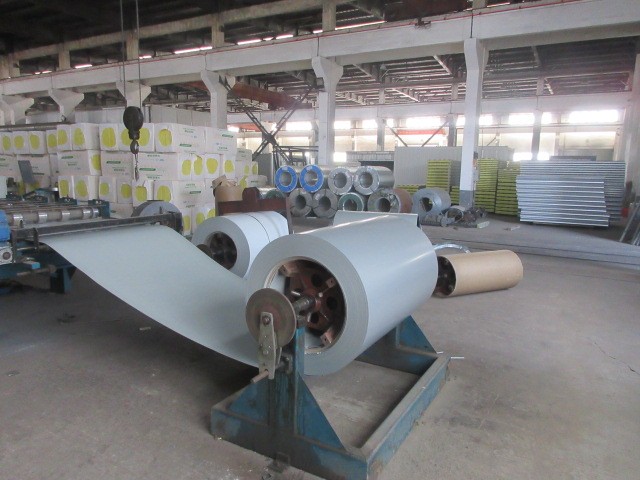
In line with the European Green Deal and Hamburg’s climate protection law (Hamburgisches Klimaschutzgesetz), construction projects must plan for circularity. Our galvanized steel structures are completely recyclable at the end of their operational lifecycle. Unlike concrete, which ends up as rubble, steel components can be melted down and repurposed without loss of performance. This reduces the lifecycle carbon footprint (LCA) and aligns with German ESG investment frameworks.
To meet the demand for corrosion resistance in highly aggressive seaside zones, our materials development path includes Zinc-Aluminum-Magnesium (ZAM) coated steels. This technology provides self-healing cut-edge protection. The chemical composition forms a dense protective barrier over cut edges and scratches, making it ideal for the maritime atmospheric conditions in the Elbe river estuary.
We design modular roof assemblies to receive high-capacity Building-Integrated Photovoltaic (BIPV) systems. Combined with electric heat pumps (Wärmepumpen) and controlled mechanical ventilation with heat recovery (KWL), our galvanized steel buildings can achieve KfW Efficiency House 40 standards. This enables developers to secure low-interest government subsidies from the German KfW bank.
By working in IFC-compliant BIM files, we provide local German engineering partners with comprehensive digital models. This makes it easy to integrate services and utilities (MEP) into the prefabricated frame, ensuring smooth on-site assembly by regional contractors.
Building in Germany requires navigating detailed structural planning approval processes (Baugenehmigung). To facilitate this, Foshan Umo House provides structural calculation sheets, material certificates (Werkzeugnisse according to EN 10204 3.1), and CE-declaration documents. We work alongside local German structural engineers (Prüfstatiker) who verify and sign off the calculations for local building authorities (Bauamt).
Our steel elements are manufactured under strict ISO 9001:2015 quality controls. Standard steel structures follow DIN EN 1090 rules, covering structural cutting, forming, welding, and corrosion protection.
We offer DDP (Delivered Duty Paid) shipping solutions to project sites in the Hamburg metropolitan area. Our logistical partners handle customs clearance, import tax processing, and port logistics. This means components arrive on site in sequenced deliveries, ready for crane erection directly from the transport trailers.
For complex projects, we can supply detailed 3D assembly guides and video tutorials, and we can dispatch Chinese erection supervisors to train and support local assembly teams in Germany.
Key structural, thermal, and regulatory answers for architects and project managers in Germany.
Browse our selection of specialized residential, agricultural, and commercial light-steel structures.
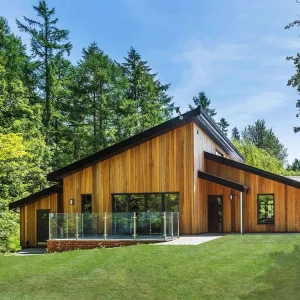
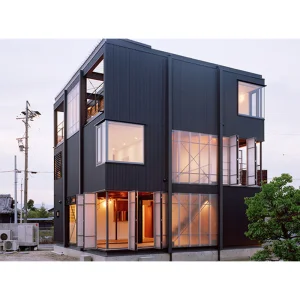
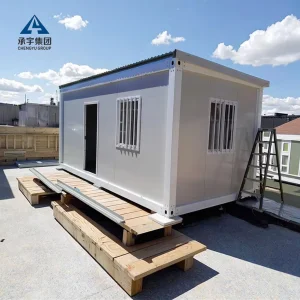
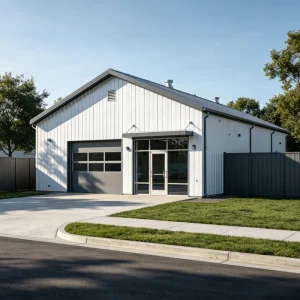
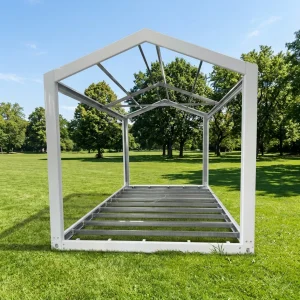
Explore folding, knockdown, and high-durability structures built for challenging environments.
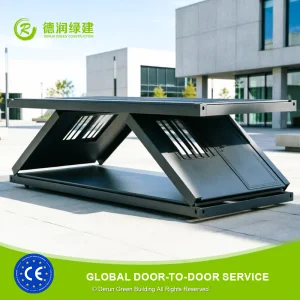
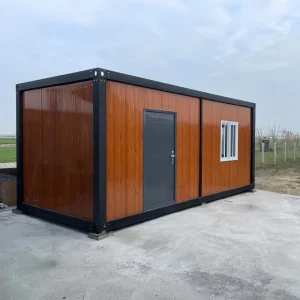
Need structural engineering advice, specific coating calculations, or direct logistics to Hamburg? Get in touch with our Foshan engineering and support team today.
 Umo House