Explore our precision-engineered structural systems, engineered to support extreme structural loads, seismic activities, and harsh microclimates. Every prefabricated component is manufactured within ISO-certified facilities under strict tolerances.
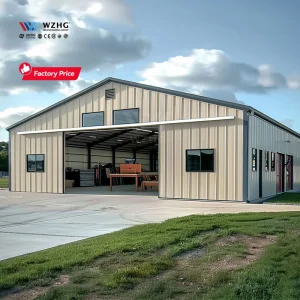
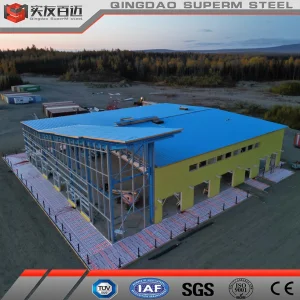
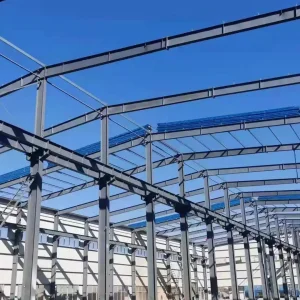
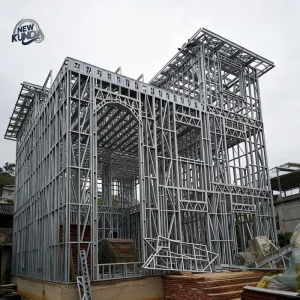
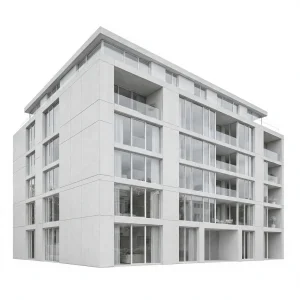
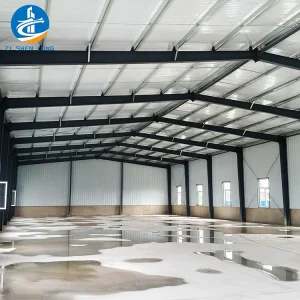
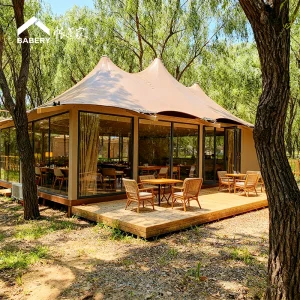
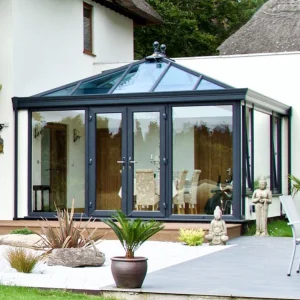
Modern architectural development is undergoing a dramatic shift towards structural systems that offer rapid installation, low environmental footprint, and maximum spatial adaptability. Multi-story steel structures represent the forefront of this industrial transformation. Historically limited to single-story warehouses or clear-span manufacturing halls, engineering advancements in hot-rolled structural sections, cold-formed steel profiles, and composite floor systems have paved the way for multi-level configurations in dense urban zones, specialized logistics parks, and high-load industrial developments.
Globally, urban land scarcity has forced industrial enterprises to verticalize their operations. Multi-level warehouses, multistory pharmaceutical facilities, and structural steel apartment complexes are replacing traditional single-tier layouts. High structural ductility makes steel the standard material in earthquake-prone regions, satisfying structural demands in seismic zones (IBC Seismic Design Category D-F, Eurocode 8). Concurrently, international green building standards (LEED, BREEAM) are penalizing traditional concrete projects due to high carbon outputs during cement hydration, shifting demand toward 100% recyclable, circular-economy-compliant structural steel systems.
China's steel engineering sector has become a major exporter in this field. By integrating advanced production equipment with a unified manufacturing supply chain, Chinese manufacturers deliver fully customized, building code-compliant multi-story steel framing complexes to clients in Europe, North America, Southeast Asia, and the Middle East.
Understanding structural performance requires analyzing the materials, load distribution frameworks, and weatherization barriers that constitute a multi-level engineered metal building (PEMB).
Multi-story structures employ heavy-gauge primary frames consisting of welded H-beams, hot-rolled I-sections, or box columns (ASTM A572 Grade 50, GB/T Q355B/Q420). Live and dead load computations conform to localized building codes. Columns and beams are designed to mitigate second-order P-Delta buckling risks, utilizing moment connections or diagonal bracing systems depending on floor clearance parameters.
Floor designs rely on hot-dipped galvanized profile steel decking sheets (normally 0.8mm to 1.2mm in thickness) integrated with shear studs welded directly to floor beams. This setup acts as a rigid horizontal diaphragm once structural concrete is poured, transferring lateral wind and seismic shear forces directly into the primary vertical structural framing system.
To pass global structural safety checks, high-performance insulation is integrated. Non-combustible Rockwool or polyurethane (PU) core sandwich panels provide localized thermal coefficients (U-values < 0.22 W/m²K) and a fire resistance rating of up to 4 hours, protecting structural integrity and containing thermal losses in HVAC systems.
| Structural Parameter | Standard Specification | Applicable Global Code Reference | Functional Outcome |
|---|---|---|---|
| Primary Structural Steel | Q355B / Q420 / ASTM A572 Gr.50 / S355JR | AISC 360-16 / EN 1993 (Eurocode 3) | High yield strength, predictable ductility, structural optimization. |
| Corrosion Protection | Hot-dip Galvanizing (Z275/Z350) + Polyurethane Topcoats | ISO 12944 (C3, C4, C5 Corrosive Categories) | Mitigates oxidation in marine or chemical environments for 50+ years. |
| Wind Load Rating | Up to 250 km/h (Custom Engineering to local site data) | ASCE 7-16 / EN 1991-1-4 (Eurocode 1) | Structural resistance during Category 5 hurricanes and typhoons. |
| Seismic Resistance | Zone 4 (Design Spectral Acceleration Ss > 1.5g) | IBC Section 1613 / Eurocode 8 | Plastic hinge formation prevention under intense seismic movement. |
| Fireproofing / Wall Enclosure | Class A Rockwool / PIR Fire-Rated Sandwich Panels (50mm-200mm) | ASTM E119 / EN 1364-1 | Achieves up to 4 hours structural fire containment, reducing HVAC draw. |
The concentration of steel mills, raw material processors, specialized finishing lines, and deep-water ports in southern China—specifically around Guangdong and the Foshan manufacturing cluster—gives Chinese multi-story steel fabricators a structural cost advantage. Integrated supply chains ensure that structural inputs like galvanized coils, pre-treated fasteners, specialized shear studs, and custom glazing profiles are sourced within a tight geographic radius, eliminating international logistical bottlenecks for upstream components.
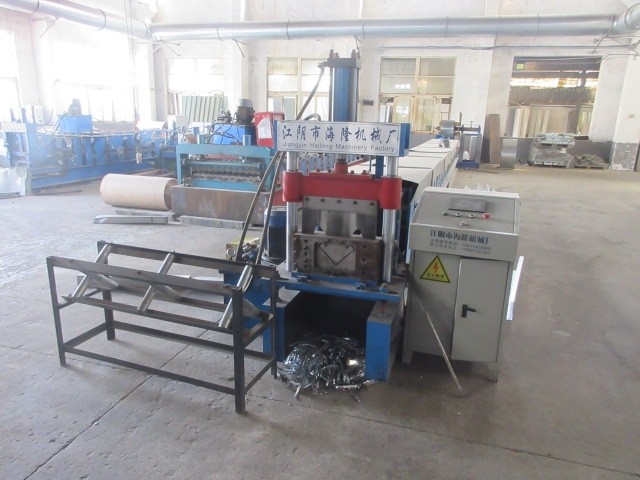
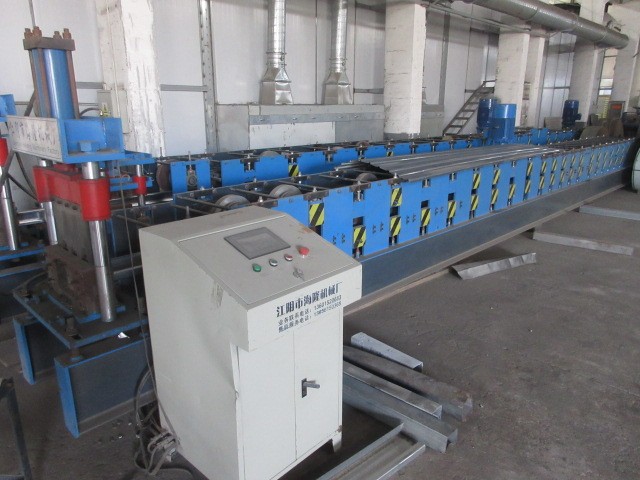
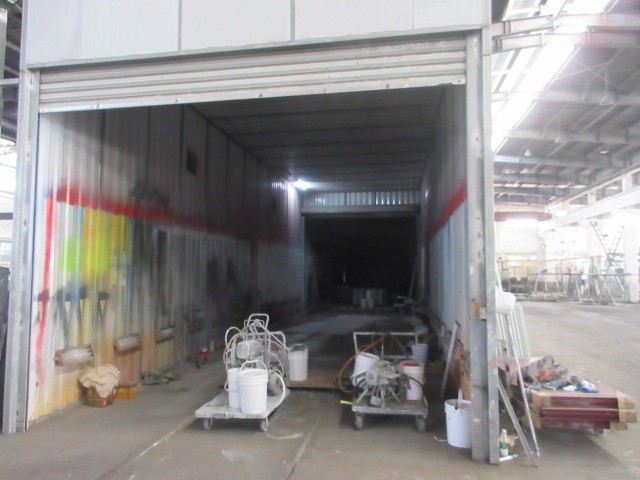
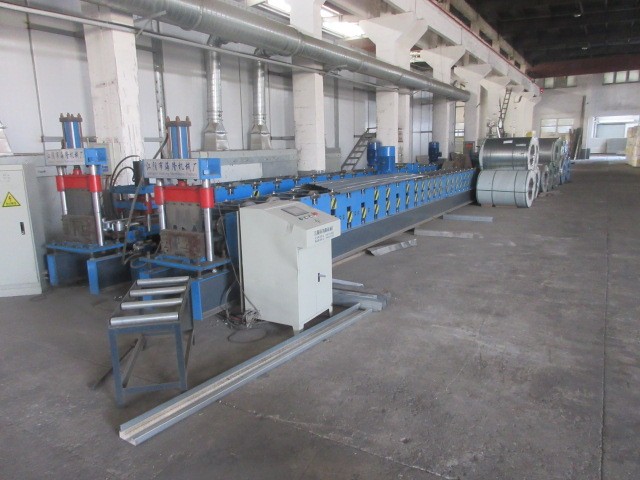
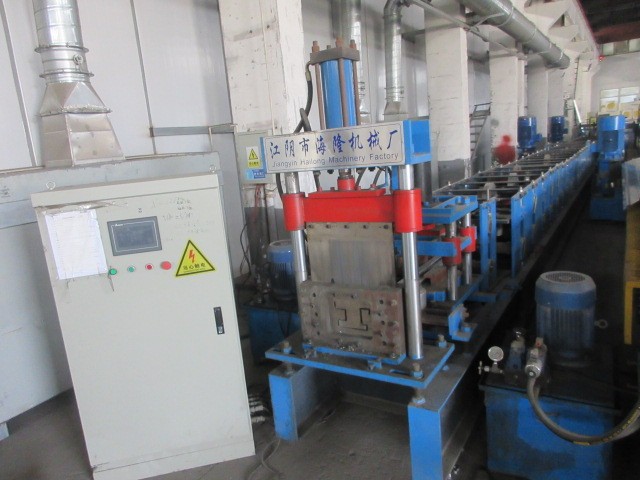
Modern Chinese exporters leverage advanced Tekla Structures and AutoCAD software to construct exact Building Information Modeling (BIM) mockups of the structure before cutting the first section of steel. CNC H-beam welding lines, automated shot-blasting machines, and robotic plasma cutters convert these digital schematics directly into physical sections. Production tolerances are maintained within +/- 1mm, avoiding misalignment challenges on-site when the building is assembled.
Top-tier Chinese structural manufacturers operate under quality systems aligned with international regulations. Welding personnel maintain certifications under AWS D1.1 (American Welding Society) and EN 287/ISO 9606 (European Welding Standards). Non-destructive testing (NDT), such as ultrasonic and magnetic particle testing, is routinely conducted on structural moment welds to guarantee zero internal flaws before components leave the paint and galvanizing bays.
Foshan Umo House Co., Ltd. applies this rigorous manufacturing framework to every multi-story prefabricated project, ensuring that our structural elements assemble efficiently once delivered to job sites globally.
Multi-story steel buildings provide tailored structural characteristics for a wide range of global applications, optimizing load-bearing capacities and thermal efficiency.
For shopping centers, multi-story office developments, and supermarkets, structural steel enables large spans with minimal interior columns. This offers total interior layout flexibility, allowing partitions to be rearranged as tenant needs shift. The inclusion of high-aesthetic glass curtain wall framing adds a premium architectural finish.
Vaccine, pharmaceutical, and high-value food storage facilities require strict thermal control. By using structural steel framing to build a multi-level vertical warehouse clad in continuous PIR core sandwich panels, operators can achieve tight cold seals, minimize thermal bridges, and support heavy internal racking systems.
Dormitory buildings, multi-level apartments, school blocks, and hospital extensions benefit from steel's fast assembly. Modular steel columns and pre-finished wall systems enable rapid structural lockup, allowing internal fit-outs to start weeks ahead of traditional concrete timelines.
Based in China's industrial manufacturing heartland, Foshan Umo House Co., Ltd. delivers global construction solutions, engineering and fabricating high-performance modular and structural steel systems.
Foshan Umo House Co., Ltd. is a professional manufacturer specializing in steel structure houses, prefabricated steel buildings, modular housing systems, and customized construction solutions in China. With extensive industry experience and advanced manufacturing capabilities, we provide durable, efficient, and sustainable building solutions for residential, commercial, industrial, and institutional projects worldwide.
Our comprehensive product portfolio includes steel structure houses, prefabricated homes, modular buildings, steel frame villas, portable houses, expandable homes, labor camps, site offices, warehouses, workshops, commercial buildings, schools, hospitals, dormitories, agricultural buildings, and customized steel construction projects. Every solution is engineered to deliver rapid installation, superior structural performance, cost efficiency, and long service life.
At Umo House, we utilize advanced production equipment and precision manufacturing technologies to ensure every component meets strict international quality standards. Our experienced engineering team provides complete OEM and ODM services, supporting customized architectural design, structural calculations, insulation systems, roofing, wall panels, electrical layouts, plumbing, interior finishing, and project-specific requirements.
Built with premium galvanized steel structures and high-performance building materials, our products offer excellent resistance to corrosion, earthquakes, strong winds, and harsh weather conditions. They also provide outstanding thermal insulation, energy efficiency, and low maintenance, making them suitable for both temporary and permanent construction applications.
Our steel structure solutions are widely used in residential communities, commercial complexes, industrial facilities, logistics centers, mining camps, construction sites, tourism resorts, educational institutions, healthcare projects, government infrastructure, and emergency relief programs. We continuously invest in research, product innovation, and manufacturing optimization to meet the evolving needs of global customers.
Today, Foshan Umo House exports its products to Europe, North America, South America, Southeast Asia, the Middle East, Africa, and Oceania, building long-term partnerships with contractors, developers, distributors, and engineering companies around the world.
Sourcing a multi-story steel building from China involves structural calculations, regulatory compliance steps, and logistics milestones. Below is our standard procurement model for global enterprises.
The buyer provides localized structural requirements, including wind speed ratings, seismic coefficients, snow load targets, and fire regulations. Our engineering office completes the structural calculations and BIM model, generating drawings for local building permit applications.
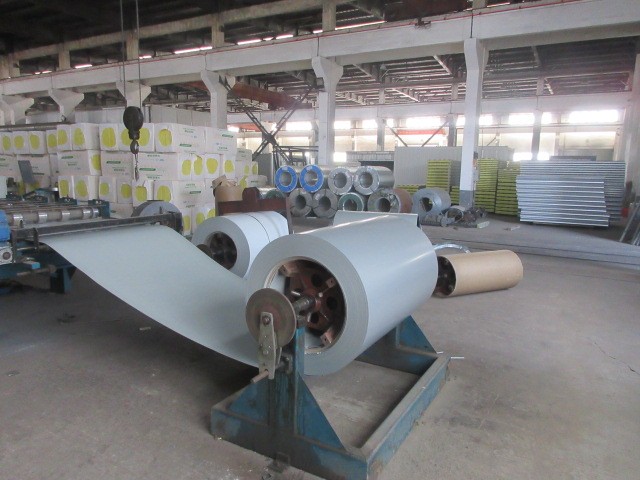
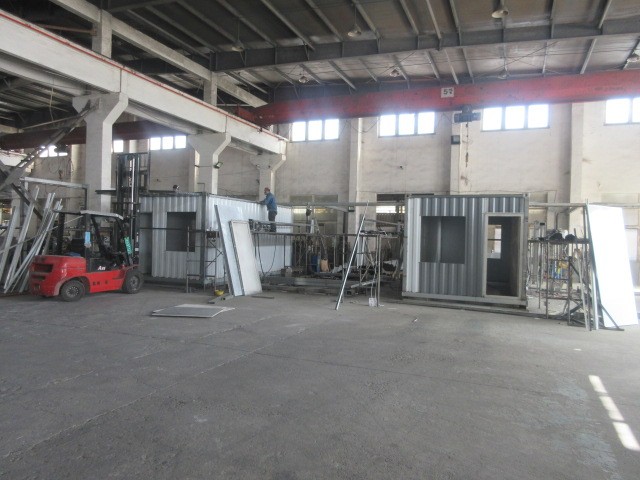
Once design drawings are approved, CNC production begins. Key checks include testing steel grades, monitoring weld quality (via NDT methods), and inspecting protective coatings. Standard trial assemblies of complex joints are performed at the factory to confirm match-drill fits.
Structural sections are bundled, labeled, and loaded into 40ft High Cube containers. All pieces are cataloged in packing lists linked to step-by-step 3D assembly guides. On-site technical support can be arranged via remote engineering video or on-site supervision.
While raw steel material costs can run higher than concrete, a prefabricated steel structure reduces overall project costs by 20% to 30%. This saving comes from shorter construction schedules (reducing labor costs and loan interest fees) and lighter foundations, which lower excavation and concrete costs.
Our engineers use specialized software to calculate loads according to regional code parameters (wind, snow, seismic loads). We design connections, member depths, and composite decking thicknesses to match the standards required by the client's local planning department.
We offer hot-dip galvanizing with thickness limits of 85 microns or more, as well as multi-layer epoxy coating systems. For harsh coastal or industrial areas, we apply polyurethane coatings matching ISO 12944 classification standards up to C5-I/M to prevent rust.
Passive fire protection is achieved using intumescent coatings, gypsum board claddings, or structural spray coatings. Wall systems are composed of mineral-fiber Rockwool panels, providing a fire resistance rating of up to 4 hours under ASTM E119 testing parameters.
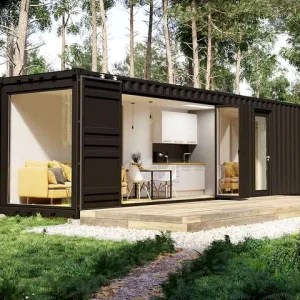
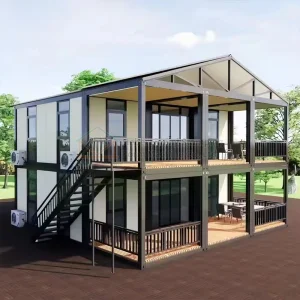
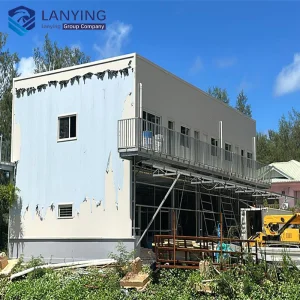
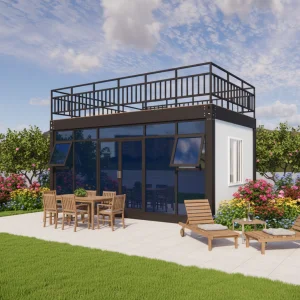
View our extended range of light-gauge villas, modular container arrays, industrial-scale agricultural buildings, and custom pre-engineered framing solutions.
 Umo House